


February 4th, 2026
The best view of Davos is from the cable car climbing toward the snowcapped Jakobshorn. Being there last month was a useful reminder of how differently U.S.-China relations look from the outside — not from Washington, nor from Beijing, but from a third space, like the Swiss Alps.
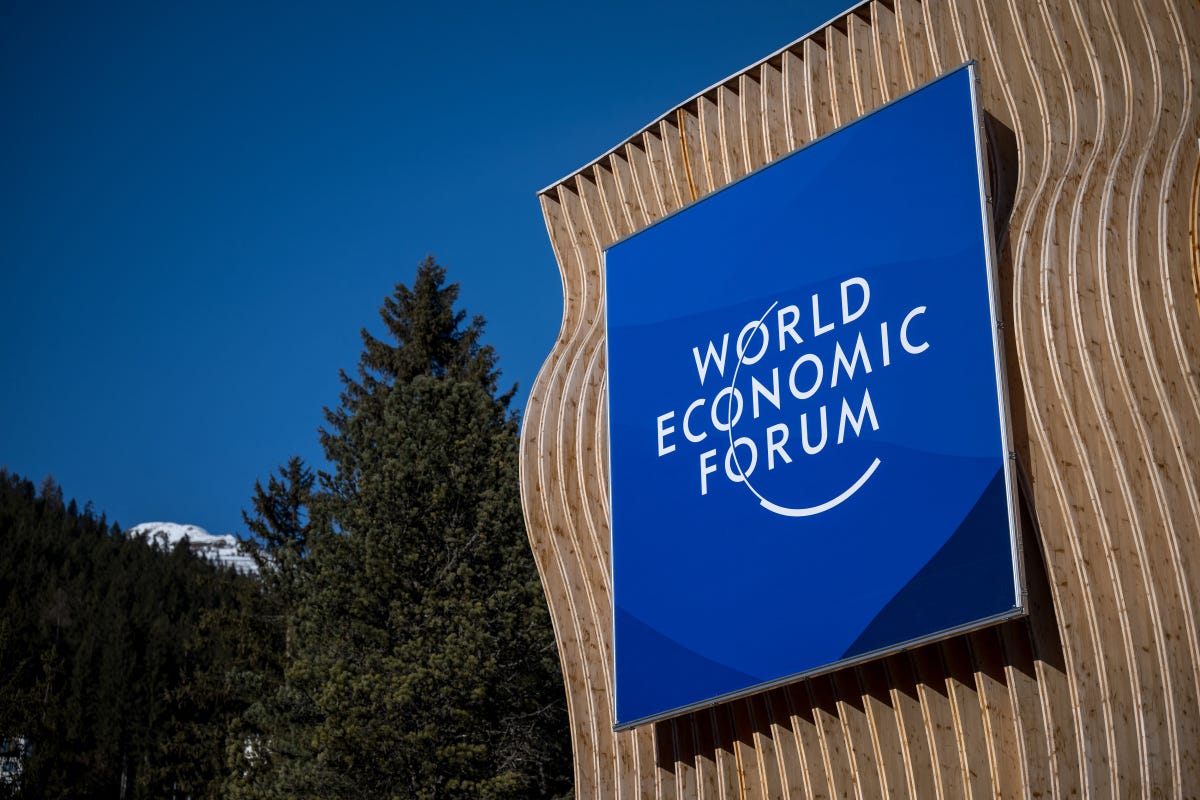
What struck me about Davos, which hosted this year’s World Economic Forum (WEF) from January 19-23, was how little people talked about China.
Lacking a hallowed “white badge” for the official forum (like most people in town that week), I relied on my more humble “hotel badge” to attend panels, receptions, and cocktail parties at the various “houses” that companies, governments, and media outlets set up along the Promenade. Across those side events it often felt like I had landed on another planet where Beijing barely existed.
As someone who has lived physically in Washington for the past few years and professionally inside Beltway discourse for even longer, this was deeply disorienting. In Washington, China seems part of nearly every foreign policy-conversation: sometimes as a threat, sometimes as an opportunity, often as a strategic competitor, but almost never as an afterthought.
At Davos this year, China frequently was an afterthought.
A European head of state spoke for half an hour on “the new world order” without mentioning China. Panels on artificial intelligence either ignored Chinese technologies or downplayed them as inferior to Western alternatives. Several European executives and technologists I spoke with had remarkably little to say about China’s rise or what it might mean for their industries and their economies.
China was not absent from the Davos consciousness — it simply was not a priority. When China did make headlines, it was often via non-Europeans. Incoming Asia Society president Kevin Rudd warned that Beijing now has “unprecedented levels of confidence” in U.S. decline. Anthropic CEO Dario Amodei argued that sending advanced AI chips to China is “like selling nuclear weapons to North Korea.” These remarks stood out precisely because they were exceptions.
What did dominate Davos was Donald Trump. Venues across town interrupted their programming so attendees could watch his WEF speech live. Given Trump’s talk of annexing Greenland and the uncertain U.S. role in Russia-Ukraine negotiations, this fixation was understandable. The night before Trump spoke, a longtime Davos fixer complained to me that “nothing matters except what Trump says,” urging me to “enjoy Davos while it lasts.”
The paradox was striking. Trump made Davos relevant again — attendance was up sharply from recent years — but in doing so, he made nearly everything else about Davos feel irrelevant.
I left Switzerland with the uneasy impression that transatlantic cooperation on China is effectively dead. Formal dialogues still meet, some initiatives still stand, and the NATO alliance still exists. But in practice, the United State and Europe are now far too preoccupied with each other, and with their own regional geopolitics, to devote sustained energy to coordinating China policy.
This bodes poorly for non-Trump Washington’s emerging ambition to build “allied scale” in economic, military, and technological domains to compete with China. Even as the EU pursues selective de-risking, several European leaders are making pilgrimages to Beijing to hedge their bets and diversify away from geoeconomic dependence on the United States.
Most surprising of all was how little attention Davos paid to China’s manufacturing juggernaut, and the long-term implications for European industry. Whether or not one believes Beijing is deliberately fostering overcapacity, the underlying fact remains: China is extraordinarily good at making things, and increasingly good at producing the advanced manufactured goods that Europe makes.
One of the most revealing conversations I had was with a Scandinavian manufacturer who admitted bluntly: “China is unstoppable. It’s too cheap. Of course they’re a threat.” Yet they were bullish about their own firm’s prospects because it had carved out a highly specialized, world-leading niche of the type enjoyed by the Taiwan Semiconductor Manufacturing Company (TSMC). Becoming the TSMC of your industry, they suggested, is the only viable strategy. It was one of the smartest things I heard all week.
If there was limited demand for China content at Davos, there was also limited Chinese interest in Davos. Beijing’s top representative this year was Vice Premier He Lifeng, a downgrade from Premier Li Qiang in 2024 and Executive Vice Premier Ding Xuexiang in 2025. He delivered a boilerplate speech praising globalization and multilateralism that barely registered. Only two Chinese companies — JD.com and TikTok — seemed to maintain a visible public presence.
Perhaps Beijing simply sees diminishing returns from Western-centric gatherings like Davos. China now has its own platforms for projecting international influence, and global elites are once again visiting China in growing numbers after the pandemic. It also hosts a “Summer Davos” each year in Dalian or Tianjin.
Still, it would be both simplistic and wrong to read Davos as evidence of a Chinese victory or as a harbinger of a Beijing-led world order. Nor should policymakers in Beijing interpret Trump’s theatrical speech as a signal that geopolitics has suddenly shifted to easy mode.
Aside from Trump, the most consequential speech at Davos arguably came from Mark Carney. The Canadian prime minister declared a “rupture in the world order” and called on middle powers to “build a new order that encompasses our values.” One of his most quoted lines was telling:
“You cannot live within the lie of mutual benefit through integration, when integration becomes the source of your subordination”
Many rightly saw Carney’s remarks as a critique of Trump’s embrace of tariffs and his hostility toward multilateral institutions. But his logic cuts more broadly. If China responds to America First by becoming more aggressive and self-interested, middle powers will accelerate their efforts to diversify away from both Washington and Beijing.
That Europe is having a different China conversation than the United States is hardly a revelation. It is a familiar point in Washington policy discussions. But it is something else entirely to experience that divergence firsthand — even for just a few days in the Alps. Given the stakes, Europe’s approach warrants close attention.
China’s low profile at Davos reflects a more fractured strategic landscape. Many U.S. partners have not stopped thinking about China; it has simply been pushed down the priority list, crowded out by domestic politics, economic stress, and doubts about the durability of American leadership. If Washington wants China to remain a point of cooperation, it will have to do more than just threaten and punish Europe. It will need to demonstrate through economic leadership, sustained diplomacy, and tangible cooperation that alignment with the United States delivers practical benefits.
Equally, Europe should not take its eye off the Indo-Pacific, even if the region is less central to European foreign policymaking than it is in the United States. China’s trajectory remains one of the most consequential forces in international affairs, yet most European sinologists I speak with lament chronic underinvestment in expertise and frequent distractions among policymakers.
At the Center for China Analysis, our mission is to study China “from the inside out.” Our hope is to contribute more meaningfully to conversations in Europe and around the world about how to interpret and respond to developments in China, a pivotal actor that will continue to shape the future of global geopolitics.
