


The Stakes: A Deeply Unequal Society
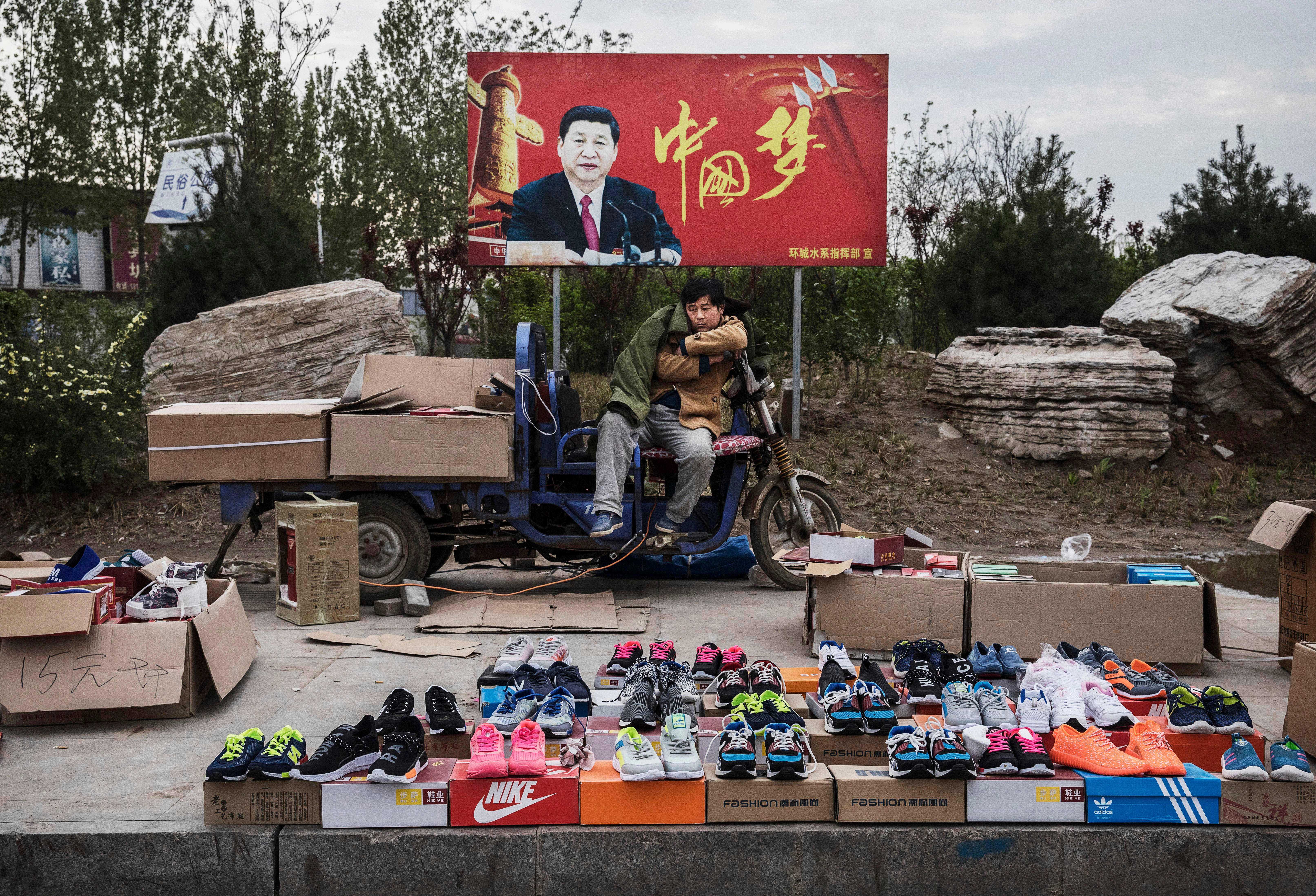
By 2025, public frustration over inequality and privilege in China had intensified, with a number of scandals exposing systemic flaws. Despite Xi Jinping’s decade-long anti-corruption campaign, these cases underscored to the public how China remains a deeply unequal society in which privilege determines outcomes.
According to the 2024 Hurun Global Rich List, China had more dollar billionaires (814) than the United States (800). At the same time, more than 200 million Chinese people are working precarious jobs in the gig economy, and youth unemployment continues to hover near 20%. China saw a number of scandals in 2025 that highlighted the country’s inequality — a young actress flaunting earrings supposedly bought with money that her father had embezzled from the state, a doctor in a Beijing hospital advancing the career of his mistress at the expense of his patients, and a Harvard valedictorian who was skewered online for her privileged educational background, to name a few.
While such public exposés of elite largesse and corruption are nothing new, these cases hit hard at a time of grinding economic uncertainty, amid continued property market woes, high youth unemployment, disruptions caused by artificial intelligence (AI), and the ongoing effects of President Donald Trump’s trade war. The extensive security apparatus of the Chinese Communist Party (CCP) has largely prevented unrest, but growing frustration could create longer-term governance challenges for the Party-state.
Core Dilemma: An Economy Leaving Millions Behind
The CCP claims to uphold socialist ideals, but China remains highly unequal. Inequality peaked by many measures in 2008 (with a Gini coefficient of 0.491), exceeding the threshold historically associated with social instability (0.4), but it has come back down since. But growth, too, has slowed in the last five years. Beijing faces a dilemma: Can China sustain economic growth without widening inequality?
People’s perceptions of the causes of inequality are shifting. Before 2014, in representative national surveys, most respondents attributed inequality to individual failings in an ascendant China. By 2023, however, the majority saw inequality as a structural issue related to unequal opportunity, corruption, and a stagnant economy. In the face of a sluggish economy, many people are less willing to accept a system they see as unfair.
China provides scant social welfare, which will come under increasing strain as demographic issues impose pressure. That tension was exemplified by the policy issued by the central government on September 1, 2025, requiring all businesses to contribute to worker benefits — a measure intended to boost employee welfare. The policy instead sparked angst that small businesses would either fail under spiraling costs or lay off workers, pushing more people into unemployment or gig jobs.
Beijing faces a bind: It must restore economic dynamism to ease popular frustrations while avoiding reforms that are structurally and politically difficult.
Outlook for 2026
Mass unrest driven by inequality remains unlikely in 2026. The CCP’s dominance over narrative, its coercive capacity, and its elite control give it resilience against systemic shocks. The Chinese population lives in fear of repercussions from the country’s deeply integrated, digitized security apparatus, which prevents mass mobilization. Moreover, there is little evidence of elite fracture at the top that could be exacerbated by grassroots instability. Socialist systems rarely crack from the grassroots — they break due to elite fragmentation.
Social and economic competition is only reinforcing the system: Party membership has never been higher — by some estimates, it is now over 100 million, more than 7% of the overall population. Competition to join the state bureaucracy is also fierce as “civil service exam fever” (考公 热) reaches a fever pitch, with 3.41 million people passing the initial screening to sit the exams in 2025. Competition for graduate schools is also intense, with 4.38 million people taking the exams last year despite there being a total of 1.3 million people admitted by graduate schools overall in 2023. Young people are leaning into the system not out of faith in it but out of fear that the alternative — being left outside the system — is worse.
In the near term, Beijing will most likely be able to manage any instability caused by inequality. But the longer-term picture is more uncertain: If the economy fails to deliver upward mobility, disillusionment will deepen and governance challenges will accumulate, setting up a tougher political environment in the future.
Conditions and Contingencies
A number of conditions support the stability of China’s system:
Economic management. The government should be able to manage the slow deterioration of the property market while deploying tools such as subsidies and bailouts to prevent a meltdown. Social mobility is stagnant and youth unemployment is high, officially registering somewhere between 15% and 20%, but China’s economy is still growing, despite the external shocks of the trade war with the United States. As long as China’s economy remains relatively stable in 2026, Beijing should be able to contain public resentment about inequality.
Elite cohesion. Despite tensions between fiscally strained local governments and the national government in Beijing, the CCP apparatus appears overall to be tightly controlled and galvanized by competition with the United States. There is no reason to believe that we will see elite fracture in 2026.
Security dominance. The CCP uses broad surveillance and predictive policing to suppress coordinated dissent before it grows.
Risk-averse youth. Rising anxiety is pushing young people to work harder within the system rather than trying to take it down. Paradoxically, precarity, though it makes young people anxious and unhappy, creates a conservative condition reinforcing CCP stability rather than undermining it. This is why we are seeing the uptick in Party membership, the desire for civil service jobs, and the college entrance exam craze.
What to Watch
The following factors can help us assess whether Beijing’s inequality management is working:
Housing market meltdown. At its height, the property market accounted for 30% of the Chinese economy, and for a majority of Chinese citizens, property represents their biggest asset and investment. A sharp drop in the housing market could break public trust and worsen financial fragility.
Youth unemployment surge. Youth unemployment rising significantly above 20% could portend greater instability. The frustration could extend from jobless youth to their parents, who have made significant investments in their children’s education, only to see limited returns. This disappointment has given rise to the term “rotten tail children” 烂尾娃 — a riff on “rotten tail buildings” 烂尾楼 (unfinished properties left vacant after developers default).
Fiscal stress. Many provinces, cities, and township-level governments are in serious fiscal stress, putting pressure on Beijing to ease their debt burden so they can continue to provide services and maintain social stability. Further deterioration in the fiscal condition of localities would be an early warning signal of broader systemic stress.
Personal debt defaults. Following the COVID-19 pandemic, total savings increased 50% from 2021 to 2024. Those who cannot save have been taking out loans, which are increasingly easy to secure given digital credit services. Nearly 80 million Chinese people — especially the young — are now at risk of default. A significant number of people defaulting on their debt would have serious social and economic ramifications that would ripple throughout the system.
Failure of small and medium-sized enterprises (SMEs). The number of SMEs that lay workers off or shutter after the September 1 benefits expansion would be one indicator of Beijing’s likelihood of continuing or expanding the policy, indicating how easily the government can expand the social safety net.
Political messaging. We should look for any renewed attempt to push the idea of “common prosperity” and the exact form it takes. President Xi Jinping has stated that he is wary of “welfarism,” so we should not expect any redistributive program of expanded social security.15 The exact form that this will take is unclear and worth watching.
Curbs on involution. We should also keep a close eye on government attempts to curb “involuted” competition and overcapacity, as seen by recent commentaries against the automotive industry. Here the government is in another bind, as addressing overcapacity could result in mass layoffs in many industries. We should pay close attention to whether the Chinese government makes actual policy and legislative interventions to curb involution, rather than hoping that companies will course correct on their own.
Alternative Scenarios
Baseline (most likely): Muddling through. The economy neither fails nor recovers. Global instability continues to weigh on growth, unemployment persists, and the housing market continues to sputter without full-scale collapse. Against these headwinds, China’s investments in green infrastructure and high technologies such as AI and automation soften the blow from other areas of stagnation. Popular sentiment is bitter, but the people bear it.
Alternative 1: Recovery. The property market rebounds after some deft policy tweaks, the country makes significant AI breakthroughs, and the world economy settles into Trump 2.0. After some positive economic indicators, investment starts cranking up, turning popular sentiment hopeful again. Anger at inequality wanes as people hope they will catch the rising tide.
Alternative 2 (least likely): Shock. A black swan event comparable to the 2008 Wenchuan earthquake triggers a true political backlash. The earthquake became symbolic of government corruption after widespread reports that many collapsed buildings had not been built to code. If a similar event happened now, after a decade of anti-corruption campaigns and amid economic pessimism, popular anger might be much harder to control. While unlikely to pose an existential threat to Beijing, it would be very painful for the local officials implicated.
To temper these predictions, it is important to note that any forecasts of the Chinese economy at present are uncertain. First, there is significant unpredictability due to geopolitical instability. The Trump administration’s seesawing over tariffs and the risks created by conflicts around the world (and the potential for some of them to end in 2026) make forecasting complex. Moreover, it is hard to trust economic data coming out of China — see, for example, the change in methodology that tracked youth unemployment figures downward in 2023 — so it is important to be careful with predictions as there is considerable uncertainty in this area.
Strategic Implications
Rising resentment and anger, as well as depressed confidence, will likely dampen personal investment and consumption. Affluent households will continue to try to take assets out of China, increasing the risk of capital flight. Meanwhile, middle-class households will likely prioritize saving as a hedge against the future. This will put deflationary pressure on the economy. More precarious households, and particularly the young, will likely take on more debt, putting them at further risk of default and serious economic consequences.
The government will attempt to reframe the narrative to deflect attention away from systemic failings and toward bad actors, whether corrupt individuals or the United States — for example, by arguing that President Trump’s trade war and geopolitical instability are the real cause of China’s woes, rather than long-term structural problems. However, a structural risk is that the central government often shifts the blame to local governments during political crises to preserve its image as a benevolent and effective ruler. In the event of social unrest, this dynamic could intensify tensions between the central and local governments as the center manages these crises while seeking to contain them.
The repressive apparatus of the state is sufficiently armed and well-oiled that it is highly unlikely that inequality will be an existential issue for the state in 2026. It will, however, continue to undermine the founding principles of the CCP and further erode people’s belief in the system. They will continue to wistfully look to the past, back to a time when the economy was growing — “the beauty of economic boomtimes” (经济上行的美) — versus today, when they believe they are in the “garbage time of history” (历史垃圾时间).
Policy Shaping and Conclusion
Beijing faces difficult trade-offs: sustaining growth, containing instability, and delivering on “common prosperity.” China needs serious welfare reforms and fiscal support to stem property-market woes while supporting youth employment. Whether Xi Jinping has the willingness or political capacity to enact such sweeping reforms remains to be seen. In the meantime, for external actors, direct influence is limited, but monitoring property, unemployment, and debt signals will be critical for decision-making with respect to interactions with China.