


1. Spring Festival Data Show Pockets of Strength, but Broader Caution Remains
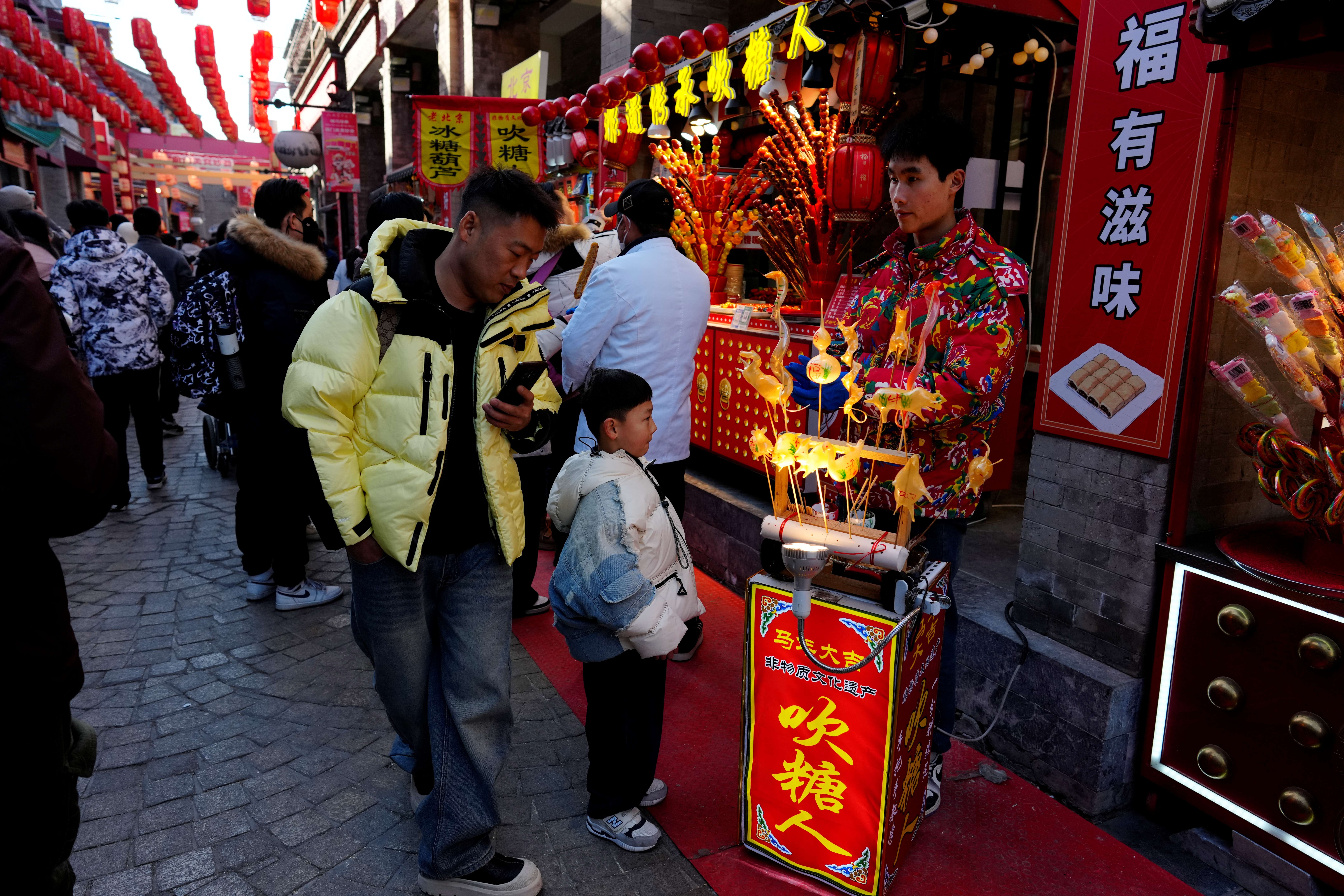
What Happened: Data from the nine-day 2026 Spring Festival holiday point to a firmer-than-expected pickup in activity, though not across the board. Domestic travel and hotel stays increased year-on-year, alongside record booking volumes and higher per-capita spending, according to Alibaba’s online travel platform Fliggy. Retail and catering activity also strengthened, rising 8.6% year-on-year in the first four days of the holiday. Cross-border trips by mainland residents increased 10%, while inbound travel rose 22%, supported by visa-free policies. Train travel reached a post-pandemic high. In contrast, holiday box office revenue fell to its lowest level since 2020.
Why It Matters: The data offer modest encouragement, but it is important not to overinterpret them. The pickup suggests that temporary policy measures, including subsidies or cash incentives for holiday purchases and targeted local support for Spring Festival tourism, may be gaining some traction. The recent stock market rally may also have reinforced a modest wealth effect and improved consumer sentiment, while the extended nine-day holiday likely enabled longer trips and boosted travel-related spending. Still, income growth remains soft, employment uncertainty persists, and consumer confidence is fragile. For now, there is not yet clear evidence of a durable, broad-based recovery in household demand.
By Lizzi C. Lee, Fellow on Chinese Economy, Center for China Analysis (@wstv_lizzi)
Learn More: Read “Can Beijing Truly Pivot Toward a Consumption-Led Economy?” by Diana Choyleva, CCA Senior Fellow on Chinese Economy in China 2026: What to Watch.
2. China Advances Its Data Regime to Power AI Innovation
What Happened: China’s National Data Administration, together with leading industry regulators, issued new guidelines to cultivate the country’s data service institutions. The policy supports the development of data exchanges, platform firms, and data merchants to promote the nationwide circulation and commercialization of data. The guidance explicitly calls for “expanding channels for the flow and trading of high-quality datasets to fit AI development.” The move comes as Beijing intensifies efforts to unlock the economic value of data, increasingly framing data as “the new oil” to fuel strategic technologies, especially AI.
Why It Matters: Access to data can shape AI innovation outcomes. Today, most private-sector data in China remain unused for AI training, often held privately in organizational and legal silos. A dedicated data-flow regime could create a structured pipeline to feed China’s “AI+” ambitions by lowering barriers to new training data. At the same time, aligning data governance with AI development may reinforce China’s broader push to institutionalize a national data market — one that includes registering data as corporate assets, building state-backed data exchanges, and expanding a franchising model to allow corporate access to government-held datasets.
By Ran Guo, Affiliated Researcher, Center for China Analysis
Learn More: Read “Assetizing, Trading, Franchising: China’s Strategy for Building a National Data Economy” by Ran.
3. Beijing Gives Lukewarm Response to Visiting German Chancellor
What Happened: During his two-day inaugural visit to China, German Chancellor Friedrich Merz exchanged economic and security concerns with President Xi Jinping and Premier Li Qiang in Beijing. Merz, who arrived with over two dozen German business leaders, urged China to lower subsidies for domestic manufacturers, loosen restrictions around critical mineral exports, and highlighted the widening trade gap between the two countries, while pressing Beijing to wield its influence with Moscow to halt the war in Ukraine. Merz also toured Unitree Robotics’s hub in Hangzhou. On the future of the China-Germany relationship, President Xi expressed hopes of bringing ties to “new levels,” anchored in reliability, innovation, and people-to-people exchanges. At the end of his visit, Merz announced China’s pledge to order up to 120 new aircrafts from the European aviation giant, Airbus.
Why It Matters: Merz’s visit underscored how much economic leverage Beijing holds in their bilateral relationship. China’s industrial achievements, especially in advanced manufacturing and automation, have shifted the equilibrium from complementarity — where Germany’s premium exports feed China’s assembly lines — to direct competition. This new structural reality is recognized by Beijing, with Xi for the first time explicitly mentioning the importance of managing “competition” in his meeting with the German chancellor. Unlike his two predecessors, who received warmer pledges of cooperation from Xi, Merz encountered a more lukewarm attitude from the Chinese leader — offering no promises to open China’s market or assurances of stability in Beijing’s policy toward Germany. Instead, the joint statement reflects efforts to acknowledge concerns and set guardrails to an increasingly competitive relationship.
By Jie Gao, Research Associate on Foreign Policy and National Security, Center for China Analysis
Learn More: Watch “China’s EU Diplomacy: The View from France, Germany, and the United States” with CCA Senior Fellow on Foreign Policy, Philippe Le Corre, and CCA Senior Fellow on Foreign Policy and National Security, Lyle Morris.
4. Cai Qi Launches Nationwide Party Education Campaign Ahead of Fifth Plenum
What Happened: On February 24, Cai Qi, chief of staff to Xi Jinping and head of the Central Leading Group for Party Building, convened a meeting to launch a nationwide education campaign. The campaign centers on studying and implementing Xi’s principles on practicing a “correct view of political achievements.” It seeks to reinforce the Party’s stated requirements of “building the Party for the public good, serving the people, making sound decisions, and acting pragmatically.” The initiative will primarily target leading bodies and officials above the county level, with particular emphasis on top leaders. It will proceed through an integrated process of discipline inspection and rectification, and is expected to conclude largely by the end of July.
Why It Matters: The campaign comes ahead of the Fifth Plenum later this year, which is expected to focus heavily on Party building. The renewed emphasis on “building the Party for the public good” reinforces the message that the Party represents the broad interests of the people rather than the private interests of any individual or faction. By tightening political discipline, maintaining anti-corruption efforts, and enhancing officials’ approaches to political performance, the campaign aims to further consolidate internal cohesion in preparation for the 21st Party Congress in 2027. Most importantly, this suggests that Xi is in the process of establishing — if it has not already been established — “the Leading Group for Cadre Inspection and Evaluation for the 21st Party Congress.”
By Lobsang Tsering, Senior Research Associate on Chinese Politics, Center for China Analysis
Learn More: Read “What Will Xi Jinping’s Priorities Be in 2026?” by CCA Fellow Neil Thomas and Lobsang in China 2026: What to Watch.
5. Northern China Sandstorm Disrupts Spring Festival
What Happened: From February 20–23, Northern China was impacted by a major sandstorm that brought yellow skies, gale-force winds, and severely depleted air quality across 130 cities due to soaring PM10 levels. Beijing was hit particularly hard — with the Air Quality Index exceeding 500, China’s maximum reading reserved for severe air pollution — and Spring Festival events temporarily halted under a yellow alert for strong winds and a blue alert for sandstorms. China’s weather alerts follow a 4-tier color system, with red signifying the most severe, followed by orange, yellow, and blue. The sandstorm sparked widespread attention on social media, with viral posts of the intense winds and near-zero visibility.
Why It Matters: China has experienced periodic sandstorms in recent years, with the last major event hitting in 2021. These storms arise from an array of factors, including desertification, overgrazing, and ecological degradation, resulting in hazardous air quality, agricultural disruption, and significant economic costs. China must continue strengthening its adaptive capacities, such as tree-plantings, to mitigate these threats.
By Taylah Bland, Fellow on Climate and the Environment, Center for China Analysis (@Taylahbland)
Learn More: Read “China’s Extreme Weather AI Tools Can Help Countries Adapt” by Taylah.