


1. Xi Signals Focus on Long-Term National Strength by Addressing Foundational Challenges
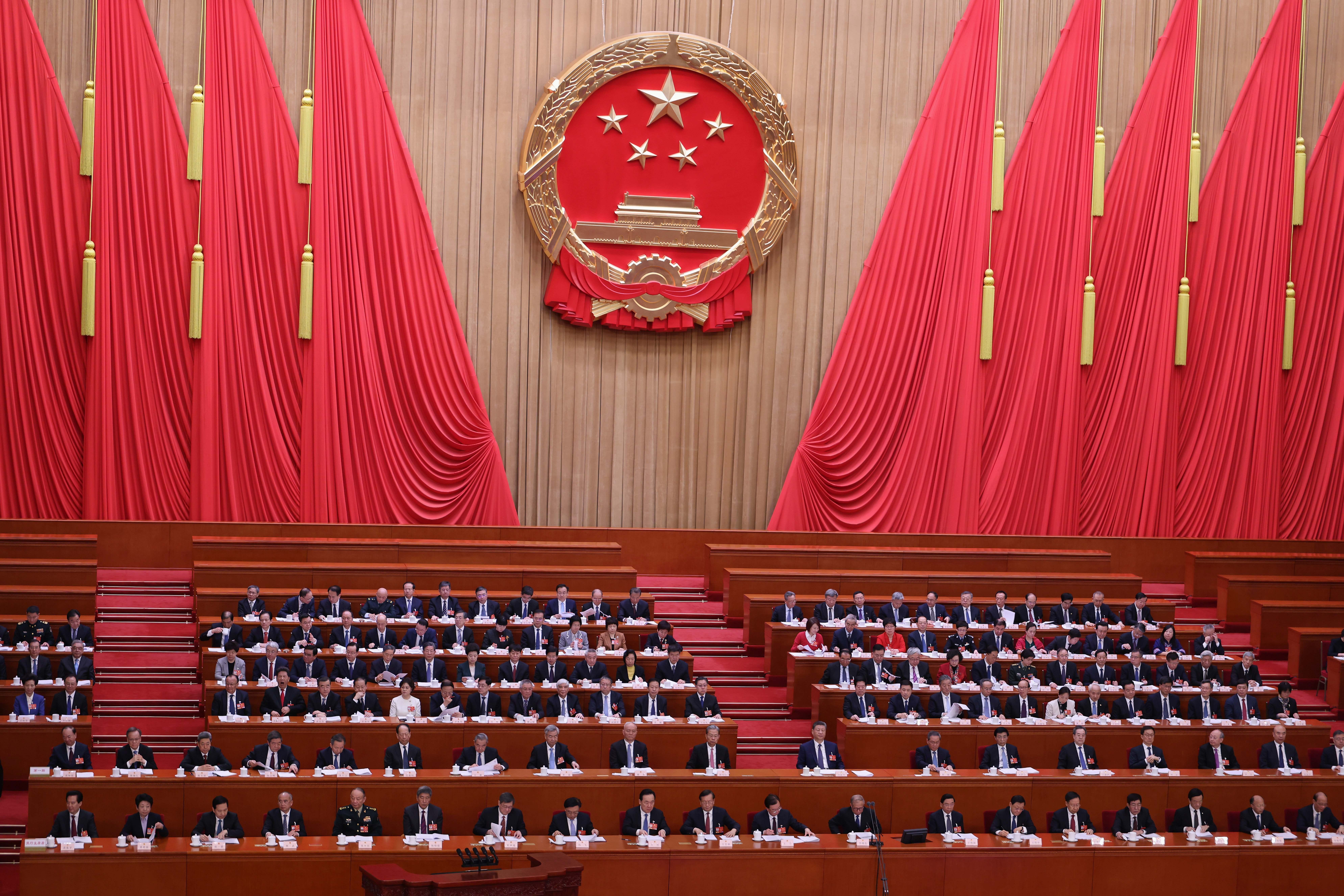
What Happened: As in previous years, Xi Jinping met with several political, economic, social, and security delegations during the just-concluded Two Sessions. His main focus was the upcoming implementation of the 15th Five-Year Plan. Xi emphasized that China will face an “increasingly complex environment” over the next five years. He noted that China remains “a socialist and developing country with significant urban–rural disparities.” On development, Xi urged officials to “study new conditions and address emerging problems” in order to tackle “deeper structural challenges.” On security, he stressed the importance of prioritizing “foundational, long-term” capacity building — strengthening “the basic underpinnings” of military force development and combat effectiveness.
Why It Matters: Between the lines, Xi’s remarks suggest that beyond concerns about political loyalty within the Party and short-term economic pressures, he remains deeply focused on China’s unresolved structural and foundational challenges in both development and security. Given his assessment that China still faces major regional disparities and remains fundamentally a developing country, Beijing’s top priority over the next five years will likely be to continue strengthening overall national power — rather than chanting slogans, such as “The East is Rising, the West is Declining” or risking a costly move such as a military attack on Taiwan.
By Lobsang Tsering, Senior Research Associate on Chinese Politics, Center for China Analysis
Learn More: Watch a webinar co-hosted by Center for China Analysis and the South China Morning Post on the key takeaways from the Two Sessions featuring CCA Fellows Neil Thomas, Lizzi C. Lee, and Lyle Morris, moderated by Neil Denslow.
2. China Announces Moderate Defense Budget Increase
What happened: During the 2026 National People’s Congress, China announced a moderate increase to its defense budget of RMB 1.91 trillion (US$277 billion). The increase amounts to a 7% increase year-on-year, but marks the slowest rise since 2021. The increase continues China’s steady military spending growth but also marks a modest slowdown from the 7.2% rate of annual increase recorded in 2023, 2024, and 2025. Chinese authorities said the funding would support PLA modernization, improve combat readiness, and accelerate the development of advanced weapons and defense technologies.
Why It matters: While the slowdown is marginal, it suggests that downstream fiscal pressures within the Chinese economy may be having an impact on defense priorities. The decline is likely due to a variety of factors, including tightening fiscal policy and a muscular anti-corruption campaign that has gutted the ranks of senior PLA officers. Given that the campaign singled out mismanagement of funds within the equipment and procurement systems of the PLA, it is not surprising that the overall defense growth rate has slowed down this year. However, this does not necessarily signal a shift in Beijing’s long-term military ambitions. Beijing may simply be prioritizing tighter oversight and more efficient use of defense funds in the short term until the corruption campaign has run its course. Thus, the slowdown is likely short-lived, and with spending expected to return to previous growth rates in the years ahead.
By Sheng-wen Cheng, Research Intern, Center for China Analysis, Lyle Morris, Senior Fellow on Foreign Policy and National Security, Center for China Analysis
Learn More: Read “What to Watch at China’s Two Sessions in 2026” by CCA Fellow on Chinese Politics, Neil Thomas, and CCA Senior Research Associate on Chinese Politics, Lobsang Tsering.
3. China Signals a New Phase of “Resilience-First” Tech Investment
What Happened: Xi Jinping’s remarks during the Two Sessions suggest that Beijing is putting more weight on economic resilience, technological self-reliance, and China’s ability to withstand external pressure. In his comments to the delegation from Jiangsu province, Xi said that major economic provinces must “maintain a solid development foundation” and improve their capacity to absorb outside shocks in order to help stabilize the national economy. He also stressed that building a modern industrial system and reinforcing the real economy will remain top priorities as China prepares its next Five-Year Plan.
Why It Matters: A key backdrop is fiscal policy. Since 2013, central government spending on science and technology has nearly doubled. It rose significantly in the mid-to-late 2010s, flattened during the COVID-19 outbreak, and has now entered a new phase of acceleration. Since 2024, planned central budget spending on science and technology has increased by 10% each year, a notable trend given tighter overall fiscal conditions. The signal is clear: the leadership is treating science and technology spending as a strategic priority tied to resilience, industrial strength, and security. The 2026 budget makes this even clearer by giving stronger support to basic research, with central government basic research spending set to increase by 16.3%.
By Shengyu Wang, Research Assistant, Center for China Analysis
Learn More: Read “2026: The Year of Rebalancing” by Lizzi C. Lee, CCA Fellow on Chinese Economy, and Jing Qian, CCA Co-Founder and Managing Director.
4. China Elevates Biomedicine to Emerging Pillar Industry in 2026 GWR
What Happened: In the 2026 Government Work Report (GWR), Premier Li Qiang identified biomedicine as an “emerging pillar industry” (新兴支柱产业), elevating its standing within China’s technology value chain. The GWR also identified expanding foreign-owned hospital access and inbound biotechnology investment as two priorities for opening China’s services sector in 2026.
Why It Matters: The upgrade from “emerging industry” to “emerging pillar industry” — placing biomedicine alongside established priorities like integrated circuits, aerospace, and the low-altitude economy — signals Beijing’s sustained push to develop global competitiveness in medical research and manufacturing, following a landmark year for Chinese biomedical innovation. The designation had been previewed by President Xi Jinping at the 2025 Central Economic Work Conference, remarks only made public in recent weeks. The GWR’s explicit focus on foreign biotechnology and hospital investment also aligns with record levels of Chinese–Western dealmaking and pilot programs that debuted in the sector last year, suggesting continued policy support and a gradual widening of market access for foreign firms.
By: Patrick Beyrer, Research Associate, Center for China Analysis
Learn More: CCA Co-Founder and Managing Director Jing Qian and Fellow on Chinese Economy Lizzi C. Lee argue that sustaining China’s biotechnology boom will require overseas cooperation in their recent Nature article, “China’s Biotech Boom: Why the Nation Must Collaborate to Stay Ahead.”
5. 15th Five-Year Plan Tests Climate Ambition
What Happened: On March 5, China’s National People’s Congress unveiled the draft of the 15th Five-Year Plan (2026–2030) (15th FYP), which serves as the overarching blueprint for economic and social development through the end of the decade. On climate, the 15th FYP sets a target to reduce carbon intensity by 17% by 2030 and to double non-fossil energy within the next decade and continue clean energy buildout. It also elevates the importance of climate adaptation, calling for stronger risk assessments and greater capacity to respond to extreme weather.
Why It Matters: The plan calls for a 17% reduction in carbon intensity by 2030, leaving China short of its Paris Agreement pledge to cut carbon intensity by more than 65% from 2005 levels by the end of the decade. Pandemic-era disruptions, slower economic growth, and continued reliance on heavy industry have complicated progress toward this goal. Projections indicate that China would need to reduce carbon intensity by 23% over the next five years to close the gap. However, it appears Beijing is transitioning away from relying on targets in favor of utilizing its clean technology industries to reduce emissions.
By Taylah Bland, Fellow on Climate and the Environment, Center for China Analysis (@Taylahbland)
For More: Read “The Evolving Politics of Climate Change in China” a new report by CCA Fellow Neil Thomas and Senior Fellow Guoguang Wu.
Very informative. I focus on technology and released the following article after the plan was formally endorsed. Thought you may be interested.
China's Five Year Plans are tremendously consequential and warrant far greater focus. https://preceperi.substack.com/p/new-focus-continuous-purpose
Ive just subscribed but ask you (and others who come across this comment) reciprocate. I write about technology, politics and philosophy and have just launched a subscription only set of articles “Apertura” for boards members and non executive directors.