


1. Xi is Confident in Policy Direction but Execution Remains a Challenge
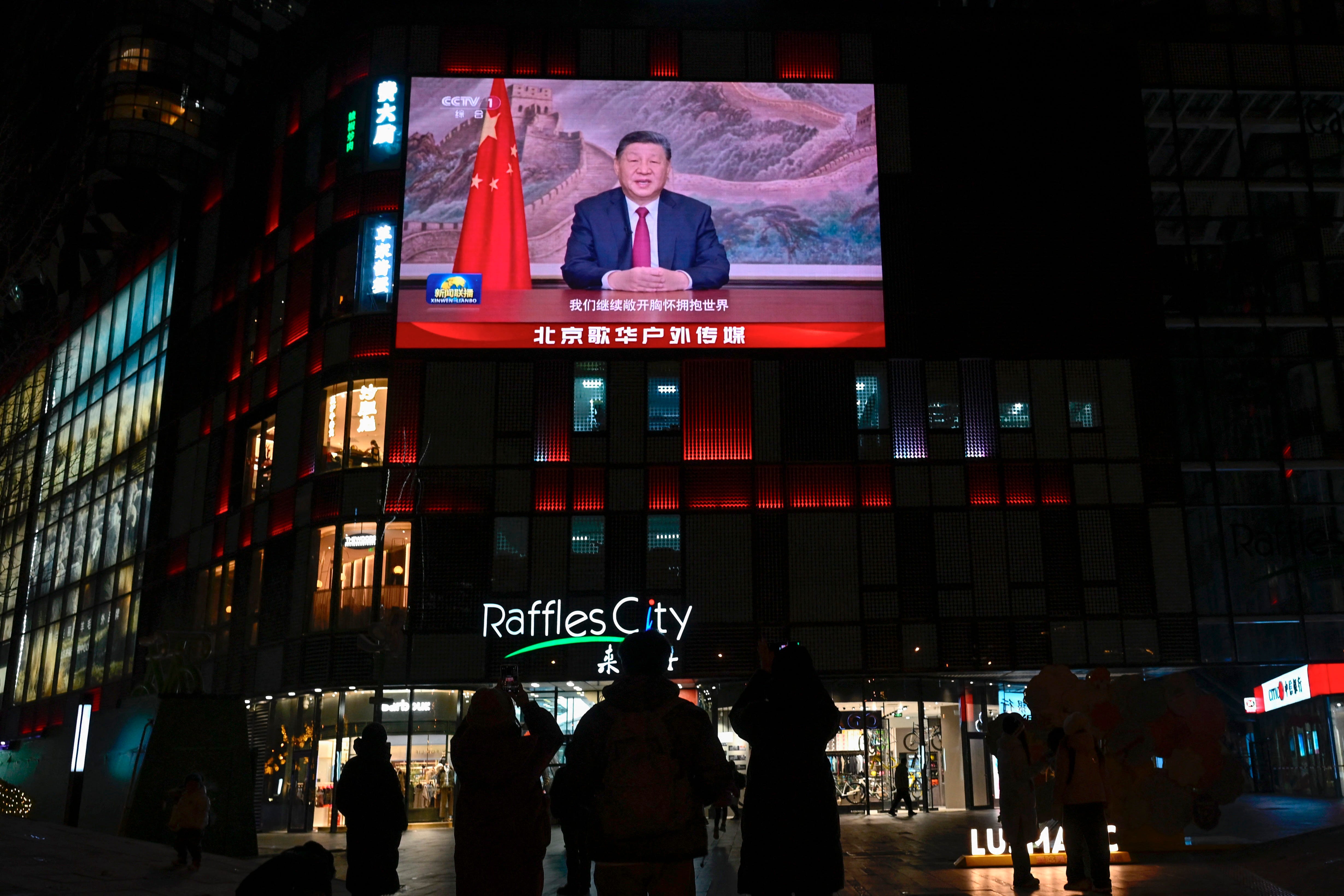
What Happened: On January 12, at the Fifth Plenary Session of the 20th Central Commission for Discipline Inspection, President Xi Jinping called for advancing strict Party self-governance by strengthening political discipline, “putting power into the cage of institutions,” and increasing transparency to ensure that power operates “in the sunlight.” He further emphasized that the Party must appoint officials who are politically loyal, responsible, and accountable and linked discipline work to fully implementing the Party Central Committee’s major decisions on “new quality productive forces suited to local conditions,” on balancing development and security, preventing a return to poverty, and resolving hidden local government debt risks.
Why It Matters: Xi’s remarks reaffirm that strict Party control, national security, and technological self-reliance will remain top priorities in 2026. Notably, he emphasized the need to identify effective methods and pathways for implementing Beijing’s major policy decisions, signaling that Xi no longer questions China’s overall policy direction. Instead, execution is now framed as the core problem. For those engaging Beijing, the implication is clear: there is little scope to contest the diagnosis, but some room to shape the treatment — influencing how policies are implemented rather than whether they are justified.
By Lobsang Tsering, Senior Research Associate, Center for China Analysis
For More: Watch this Spotlight Presentation on Xi Jinping’s priorities and elite politics by Neil Thomas, Fellow on Chinese Politics, at the launch of CCA’s China 2026: What to Watch.
2. China’s Top-Tier AI Superstars Identify Three Key Gaps Behind the United States
What Happened: At the AGI-Next closed-door forum held in Beijing on January 10, China’s AI industry superstars from leading big tech firms and startups engaged in an unusually frank discussion about the country’s AI trajectory. One speaker notably framed the U.S.-China AI gap as a “rich versus poor” game, where U.S. AI firms can afford vast amounts of compute for high-risk exploration, while their Chinese counterparts are capital constrained. Much of China’s compute is tied up in maintaining existing products, which limits tolerance for research uncertainty. As a result, effort is shifting away from frontier research and toward applications. Another speaker noted that incremental model performance gains matter little to consumers, while enterprises, especially in software and coding, are willing to pay for better performance.
Why It Matters: The discussion offers a rare glimpse into the thinking of frontier scientist-entrepreneurs leading China’s AI push. The consensus was that China’s strengths lie in efficiency and execution under constraint, not in defining global research cutting edges, with broad agreement that enterprise AI represents the most pragmatic path forward. One speaker put the odds of a Chinese firm leading globally in the next three to five years at only roughly 20%, citing not only compute gaps and a lower concentration of top-tier talent but also a research culture that favors certainty and visible rankings over long-term, risky explorations. By contrast, OpenAI’s tech breakthroughs came from embracing the uncertainty of early-stage experimentations. A culture of risk aversion, he acknowledged, may be China’s hardest obstacle to overcome.
By Lizzi C. Lee, Fellow on Chinese Economy, Center for China Analysis
Learn More: Watch “The Smartphone That Acts on Your Behalf: Is ByteDance-ZTE Agentic AI Phone a Game Changer or a Cautionary Tale?,” exploring the competitive landscape of U.S.-China AI deployment, moderated by Lizzi.
3. Canada’s Carney Visits Beijing, First Since 2017
What Happened: Canadian Prime Minister Mark Carney arrived in Beijing on Wednesday night for a four-day visit, the first by a Canadian leader since 2017. Following meetings with President Xi Jinping and Premier Li Qiang, the two sides agreed to roll back the triple-digit tariffs imposed on each other’s key exports. Canada will remove its additional 100 percent duties on Chinese electric vehicles and replace them with an import quota of 49,000 units at a preferential 6.1 percent tariff rate, while China will sharply lower tariffs on Canadian canola seed and is expected to lift added duties on canola products, pork, seafood, and peas by March. Beijing also announced visa-free entry for Canadian visitors.
Why It Matters: The package marks a tangible reset after years of strained relations, reflecting a shared interest in insulating bilateral trade from Washington-driven tariff pressures. The EV-for-canola arrangement highlights the economic complementarity between China’s industrial exports and Canada’s agricultural and energy sectors, while giving Ottawa room to ease consumer costs and attract investment. Constraints remain — including Canada’s alliance with the United States and sensitivities around critical minerals — but the tariff deal and visa-free access open space for incremental confidence-building in areas such as agriculture, energy, and finance.
By Jie Gao, Research Associate on Foreign Policy and National Security, Center for China Analysis
Learn More: Explore CCA’s The Art of Dealing with China, an initiative examining the complex geo-economic environment that multinational corporations face and the varied ways they navigate it.
4. China’s State Council Takes on Food Delivery Platforms
What Happened: On January 8, Office of the State Council’s Anti-Monopoly and Anti-Unfair Competition Commission announced a broad investigation into China’s food delivery platform service industry. While China’s platform economy has long been credited with streamlining online commerce and delivering exceptional convenience for consumers, regulators are increasingly concerned that competition has become excessive and that platforms are using unfair practices to compete. The move follows the release of new rules on online trading platform governance issued on January 7, underscoring a broader government push to bring the platform economy under tighter, more standardized oversight. The investigation is part of policymakers’ wider “anti-involution” drive aimed at curbing destructive competition and stabilizing market behavior.
Why It Matters: For consumers, ever cheaper delivery has meant short term gains, but authorities warn that distorted competition is eroding margins for merchants and workers and undermining the sector’s long term sustainability. The announcement pointed to issues such as “excessive subsidies, price wars and control over traffic flow in the online food delivery platform service industry.” Over time, tighter rules could push platforms to compete less on pure discounting and more on service quality, operational efficiency, and technology — including automation and AI — reshaping how tens of millions of Chinese users, couriers, and merchants interact with the online food delivery market.
By Barclay Bram, Fellow on Chinese Society, Center for China Analysis
Learn More: Watch Barclay’s Spotlight Presentation at the launch of CCA’s China 2026: What to Watch where he examines China’s social inequality and unemployment.
5. Hebei Province Struggles for Heat
What Happened: Over the last week, reports have emerged that residents in rural Hebei Province are struggling to afford their heating bills, leaving many shivering through freezing winter conditions. In 2017, Beijing mandated that dozens of northern regions transition away from coal in favor of electric- and natural gas-powered heating systems to combat air pollution. To support the transition, the government provided household subsidies, but in parts of Hebei these subsidies have been sharply reduced or lapsed altogether, leaving residents with electricity bills they simply cannot afford.
Why It Matters: These accounts from Hebei have attracted significant attention in both Chinese and international media, illustrating the social costs that can accompany aggressive clean air policies. They underscore the ongoing challenge of ensuring sustainable energy security in rural areas, while highlighting that progress in the fight against air pollution will be uneven and prolonged. As China continues its energy transition, social welfare considerations and the interests of vulnerable communities will need to be at the forefront of policy design, alongside mechanisms to support implementation and safeguard lives.
By Taylah Bland, Fellow on Climate and the Environment, Center for China Analysis
Learn More: Watch the Spotlight Presentation by Li Shuo, Senior Fellow on Climate, at the launch of CCA’s China 2026: What to Watch where he discusses China’s climate agenda.