


1. Trump’s China Trip Delay Not Expected to Change Beijing’s Basic Approach PLA Air Activity Near Taiwan Paused During Two Sessions
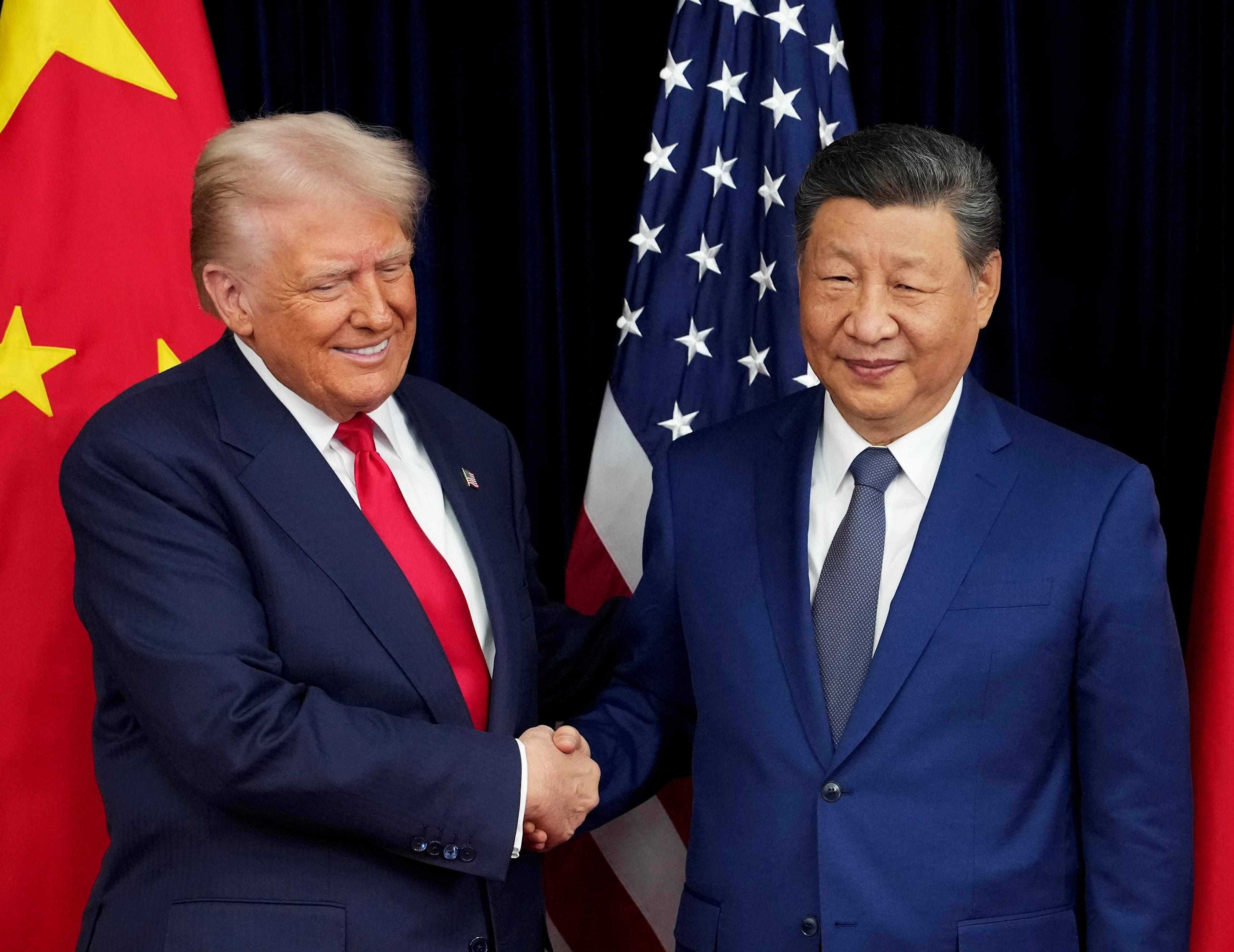
What Happened: Donald Trump announced he will delay his planned visit to China by about a month as he deals with the war in Iran. Recent reporting suggests Chinese officials remain in contact with Washington about the summit and are treating the postponement as manageable rather than alarming. A short delay gives both sides more time to prepare for a meeting that appears to have been short on planning and concrete deliverables, even as pre-summit talks continue on trade, agriculture, rare earths, and investment issues.
Why It Matters: The delay is unlikely to produce a major shift in China’s position. Whatever happens in Iran, Xi Jinping still appears to want a relatively stable relationship with Washington and to avoid a sharper spiral of tariffs, sanctions, or export controls. A prolonged war could raise energy and economic risks for China, but it is unlikely to overturn Beijing’s preference for steadier ties. The most likely path for U.S.-China relations remains high-level diplomatic stabilization with continued economic and security competition unfolding below. The postponement rather than cancellation of Trump’s trip suggests neither side wants to abandon top-level engagement, but certain shocks to the relationship, such as the kind seen during the 2023 balloon incident, can still disrupt diplomacy quickly.
By Neil Thomas, Fellow on Chinese Politics, Center for China Analysis (@neilthomas123)
Learn More: Read “Can the United States and China Find a New Equilibrium on Trade and Technology?” in China 2026: What to Watch, by Brendan Kelly and Michael Hirson
2. PLA Air Activity Near Taiwan Paused During Two Sessions
What Happened: Between February 27 and March 5, and again from March 7 to 10, 2026, PLA air activity around Taiwan’s Air Defense Identification Zone (ADIZ) paused completely — the longest lull since Taiwan began publicly releasing daily military data in 2020. The pause represents a rare break in otherwise routinized military drills near Taiwan. Air activity resumed on March 11, returning to an established pattern of regular incursions.
Why it Matters: The most likely explanation for the pause is that PLA air incursions into Taiwan’s ADIZ typically drop significantly around the time of China’s annual “Two Sessions” meetings, which occurred from March 4–11 — though a pause in air activity for 11 days is unprecedented since at least 2020. An alternate explanation is that recent PLA purges have degraded operational readiness. However, the PLA has demonstrated a capacity for complex joint operations near Taiwan despite recent personnel changes, including major exercises following the December 2025 purge of General Zhang Youxia. PLA Navy operations also did not decline during the same window, with 76 vessel transits recorded near Taiwan. Thus, these latter explanations seem less plausible. Now that air activity has resumed, expect sustained incursions near Taiwan for the foreseeable future.
By Lyle Morris, Senior Fellow on Foreign Policy and National Security (@LyleJMorris), and Sheng-Wen Cheng, Research Intern, Center for China Analysis
Learn More: Read “PLA Watch: Special Issue by Dr. Phillip C. Saunders” on the Center for China Analysis’ Substack
3. China’s Retail and Investment Data Show Conflicting Trends
What Happened: China’s National Bureau of Statistics (NBS) released its January–February 2026 data covering retail sales, fixed asset investment, and monetary conditions. Retail sales rose 2.8% year-on-year, with services at 5.6%, supported by the extended Spring Festival holiday and early trade-in subsidies. Fixed asset investment (FAI) rebounded to +1.8%, led by infrastructure (+11.4%) and equipment spending (+11.5%) as the 15th Five-Year Plan cycle begins. Private investment stayed in contraction at -2.6%, and real estate remained weak with new starts down 23%. The broad money supply (M2) grew 9.0%, signaling ample liquidity.
Why It Matters: The data came in well above a deeply pessimistic market consensus. Caixin’s survey had forecast FAI at -3.7% versus the actual +1.8%. But the composition raises concerns. Growth is driven by infrastructure and policy-supported equipment upgrades, while private investment, real estate, and underlying consumption remain soft. Inflation signals are still weak. February CPI rose 1.3%, driven by holiday effects, but the January–February average was only +0.8%, far below the 2.0% target. February producer prices at -0.9% confirms ongoing factory-gate deflation. Data from the People’s Bank of China shows ample liquidity in the banking system, yet credit demand remains subdued. Reaching the 2.0% inflation target will likely require stronger push on demand-side policy.
By Shengyu Wang, Research Assistant, and Lizzi C. Lee, Fellow on Chinese Economy, Center for China Analysis (@wstv_lizzi)
Learn More: Read “2026: The Year of Rebalancing” by Lizzi and Jing Qian, CCA Co-Founder and Managing Director.
4. Xi to Double-down on Centralized Governance Over the Next Five Years
What Happened: The full text of the 15th Five-Year Plan, spanning sixty-two chapters, has been officially released. A critical focal point for political direction is Chapter 61, which details three strategic pillars designed to reinforce the “centralized and unified leadership of the CCP” through 2030: 1) Comprehensive Party oversight: integrating Party leadership into every stage of plan implementation while maintaining a commitment to “democratic, scientific, and law-based” decision-making. 2) Professional competency: enhancing the capacity of officials to govern in accordance with rules and regulations. 3) Strict supervision: intensifying oversight of “top leaders” and the rising generation of young cadres to ensure ideological and operational alignment.
Why It Matters: While Xi Jinping has made “centralized and unified leadership” a hallmark of his tenure, this plan suggests he is not abandoning the traditional Chinese sixteen-character principle that has guided CCP decision-making since the 1990s: “collective leadership, democratic centralism, individual consultations, and collective decision-making.” By blending absolute central authority with these established consultative mechanisms, Xi aims to continue to navigate the delicate balance between security and development. Barring significant internal upheaval or systemic “black swan” events, the CCP appears structurally positioned to meet its core political and developmental targets over the next five years.
By Lobsang Tsering, Senior Research Associate on Chinese Politics, Center for China Analysis
Learn More: Read “What Happened at China’s Two Sessions in 2026“ with key takeaways from CCA experts.
5. China Passes New Environmental Code
What Happened: At the Two Sessions on March 12, China’s legislature adopted the Ecological and Environmental Code, the second such code after the 2020 Civil Code. This legislation consolidates elements of China’s existing environmental framework, bringing together laws and regulations across air, land, and water with a specific chapter dedicated to green and low-carbon development. It also reinforces China’s continued role in global environmental governance.
Why It Matters: Amid continued climate impacts and geopolitical instability, China’s environmental code reinforces the country’s commitment to strengthening its domestic and international environmental governance. The emphasis on green and low-carbon development aligns with China’s leadership in clean technologies and the broader economic benefits the industry yields.
By Taylah Bland, Fellow on Climate and the Environment, Center for China Analysis (@Taylahbland)
Learn More: Read “The Evolving Politics of Climate Change in China” by CCA Fellow Neil Thomas and Senior Fellow Guoguang Wu.