


Welcome to the October edition of PLA Watch, a monthly newsletter from the Center for China Analysis that provides insights into the latest developments in Chinese military affairs and writings using primary sources.
This month has seen two confrontations involving China in the South China Sea, one with Australia’s air force and another with the Philippines. Meanwhile, China conducted a series of joint exercises with Malaysia to continue its military engagement with the region. China and India held a general-level border talks, continuing their de-escalation efforts. We also unpack the massive purges within the PLA and feature an analysis of the PLA Rocket Force’s recent training exercises.
To help us improve, we’d love to hear your feedback. If you have two minutes, please take a moment to fill out this short survey. Thank you!
Written by:
Lyle Morris, Senior Fellow, Center for China Analysis
Jie Gao, Research Associate, Center for China Analysis
Sheng-wen Cheng, Intern, Center for China Analysis
Section I: PLA News
China, Philippines Exchange Accusations After Collision Near Thitu Island
On October 12, China and the Philippines traded accusations after a confrontation near Thitu Island in the Spratlys. Beijing said the China Coast Guard (CCG) “expelled” Philippine vessels it claimed had “illegally intruded” near Sandy Cay and blamed Manila for a “slight collision” with CCG hull 21559. China’s state media described the encounter as a “lawful and necessary measure” to safeguard national sovereignty, insisting that the Philippines bore full responsibility for the collision and warning Manila to refrain from further “provocative intrusions.”
Manila countered that its vessels were operating lawfully within its exclusive economic zone when a Bureau of Fisheries and Aquatic Resources ship was blasted with high-pressure water and then rammed. Philippine authorities later released photos and video footage of the incident. The United States condemned China’s actions and reaffirmed commitments under the U.S.–Philippines Mutual Defense Treaty.
CCA Analysis: This latest incident represents a continuation of China’s coercive maritime behavior in the South China Sea, where the CCG and maritime militia frequently employ water cannons, blocking maneuvers, and close intercepts to assert control over disputed waters. Such risky behaviors may cause China to shoot itself in the foot, as illustrated with the August collision of a CCG vessel and a PLA Navy destroyer during the former’s pursuit of a Philippine patrol ship.
China and Australia Trade Barbs over Mid-air Encounter over South China Sea
On October 20, China and Australia exchanged accusations after an encounter over the disputed South China Sea, with the PLA’s Southern Theatre Command Air Force saying that it “drove away” a P-8A military aircraft that illegally intruded into Chinese airspace.
“The People’s Liberation Army Southern Theatre Command organized naval and air forces to track and monitor the intruder in accordance with regulations, implement effective countermeasures, and issue warnings to drive it away,” Senior Colonel Li Jianjian, a spokesperson for the command, said in a statement. Li said the incident happened in airspace over the Paracel Islands, which are known as the Xisha Islands in China. Li added that “Australia’s actions seriously infringed upon China’s sovereignty and could easily trigger maritime and aerial incidents,” saying that the PLA warned Australia to “immediately cease its provocations.”
The statement came after Australia’s defense ministry said it expressed “concerns” to Beijing over the “unsafe and unprofessional” maneuvers of a PLA Air Force (PLAAF) jet over the South China Sea, accusing the crew of releasing flares close to an Australian patrol aircraft. According to a ministry statement, a Royal Australian Air Force P-8A Poseidon maritime patrol aircraft encountered the PLAAF’s Russian-made Su-35 fighter aircraft while conducting a maritime surveillance patrol over the South China Sea on Sunday. The Australian defense ministry said it had conducted maritime surveillance activities in the region for decades in accordance with international law and that it “expects all countries, including China, to operate their militaries in a safe and professional manner”.
CCA Analysis: This is not the first time that the PLAAF has released flares near Australian military aircraft in the South China Sea. In February, two Chinese J-16 aircraft deployed flares that passed within 100 feet of another Australian P-8A. China’s foreign ministry said at the time that Australia had “deliberately intruded” into China’s airspace and “jeopardized” its national security. The same month, Beijing and Canberra resumed the China–Australia Defense Strategic Dialogue after a multi-year hiatus, yet the talks did not curb unsafe encounters or rebuild operational trust. Another Chinese fighter jet was also accused of intercepting an Australian Seahawk helicopter in international airspace in May 2024, dropping flares across its flight path. This latest incident continues a trend of PLA operators conducting unsafe or unprofessional behavior against the United States and its allies and partners in the region.
China and Malaysia Conducted “Peace and Friendship-2025” Joint Exercises
From October 19 to 21, China and Malaysia carried out a series of joint drills under the theme of “Humanitarian Assistance and Disaster Relief (HADR) and Maritime Security.” The exercise included combined land-sea-air operations, live drills on maritime safety, and – for the first time in the series – an air force exchange and seminar. Other ASEAN member states were also invited to observe from the side.
The Chinese contingent is drawn mainly from units under the PLA Southern Theater Command’s Army, Navy, and Air Force, along with personnel from the PLA Hong Kong Garrison and the Guilin Joint Logistic Support Center. The PLA Navy deployed Type 052D destroyer Yinchuan, Type 071 amphibious transport dock Jinggangshan, and Type 056A corvette Jingmen. In the Strait of Malacca, the drills included joint search-and-rescue missions, escort operations, and maritime interdiction exercises conducted under shared command frameworks.
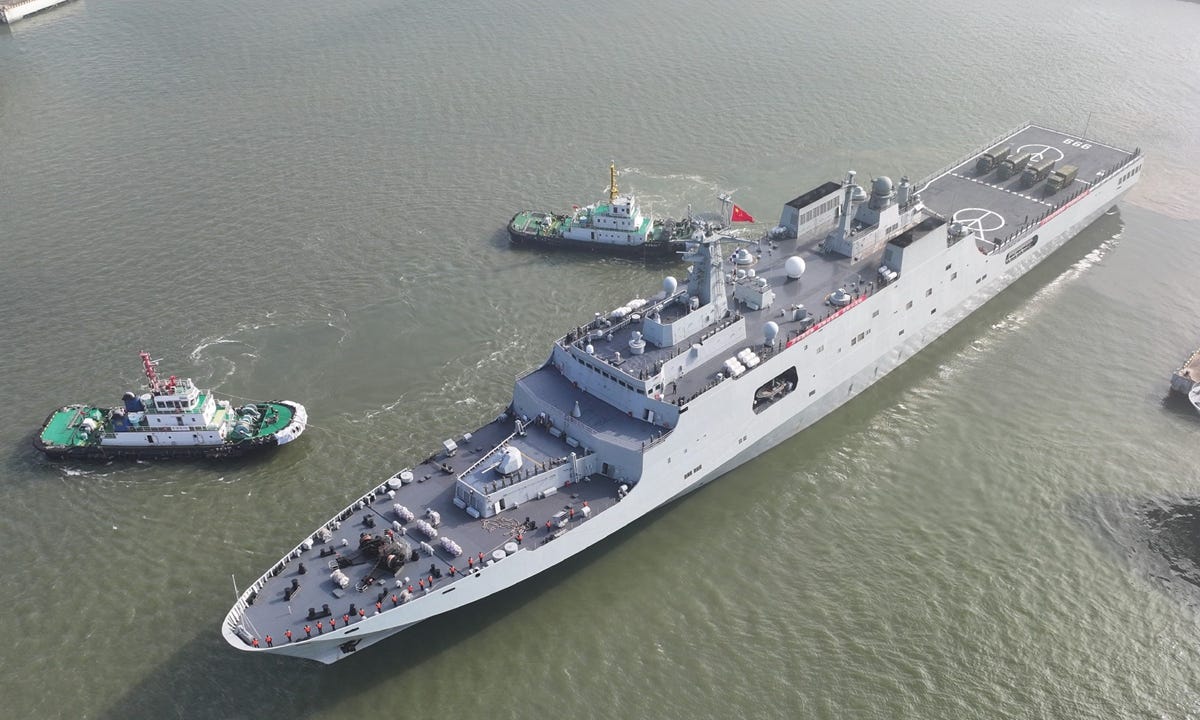
CCA Analysis: The “Peace and Friendship-2025” exercise marks the sixth iteration of this series that previously also involved other ASEAN countries such as Thailand, Cambodia, and Vietnam. By focusing on HADR and maritime safety, Beijing presents itself as a regional public-goods provider while strengthening military interoperability with Malaysia, a key stakeholder along the strategically vital Malacca Strait.
However, the bilateral exercise takes place against the backdrop of overlapping maritime claims between China and Malaysia. Luconia Shoals, for example, which lie within Malaysia’s asserted Exclusive Economic Zone (EEZ), also fall within China’s broader “nine-dash line” claim. While Chinese vessels are frequent visitors to Malaysia’s offshore oil and gas installations, the two countries have been keeping a low profile in dealing with frictions. However, given the recent escalations between China and the Philippines, these engagements may not guarantee zero-aggression from China’s maritime militia.
China and India Held the 23rd General-Level Border Talks
On October 25, China and India held the 23rd round of corps commander-level talks at the Moldo–Chushul border meeting point in eastern Ladakh. The meeting, attended by the Indian 14 Corps commander and the PLA South Xinjiang Military District chief, was described as “friendly and cordial.” Both sides agreed to continue dialogue through existing military and diplomatic mechanisms and reaffirmed their commitment to maintaining “peace and tranquility” along the western sector of the Line of Actual Control (LAC). It was the first senior-level engagement since the August meeting between Chinese Foreign Minister Wang Yi and Indian National Security Advisor Ajit Doval.
Despite ongoing diplomatic contacts, there has been no tangible de-escalation on the ground. Troops from both sides remain forward deployed for a sixth consecutive winter, and India continues to mirror the PLA’s large-scale military presence and infrastructure buildup across the LAC. China, for its part, has expanded runways, shelters, and logistics facilities at key bases such as Hotan, Kashgar, and Shigatse.
CCA Analysis: While Beijing and New Delhi are engaging through diplomacy on their border disputes, China continues to strengthen its deterrence against India at the frontier through infrastructure constructions and regular exercises. For example, recent reports reveal that Ali (Ngari) Prefecture, located close to the disputed area, achieved full power-grid coverage for PLA outposts through the integration of renewable microgrids and state energy infrastructure. These upgrades provide critical advantages for the Chinese military by reducing diesel and coal reliance by over 80 percent and enabling year-round communications and surveillance in the high-altitude region. Meanwhile, Western Theater Command units have intensified all-weather training on the plateau, integrating radar countermeasures, night strikes, and joint helicopter assaults under extreme conditions. Even as Beijing projects an image of restraint, the PLA’s improved energy security, mobility, and combat readiness along the LAC enhance China’s ability to deter India and endure positional advantage in the Himalayas.
Section II: PLA Strategy
CMC Announces Investigation of Ten PLA Generals and Elevates Zhang Shengmin to Vice Chair of Central Military Commission
On October 17, 2025, just two days ahead of the Fourth Plenum, the Ministry of National Defense of the Communist Party of China (CPC) announced that the Commission for Discipline Inspection of the Central Military Commission (CMCCDI) had initiated an investigation into nine senior PLA generals, sending shockwaves through both domestic and international circles. These included He Weidong, a member of the Central Political Bureau and Vice Chairman of the Central Military Commission; Miao Hua, a member of the Central Military Commission and former Director of the Political Work Department; He Hongjun, former Executive Deputy Director of the Political Work Department; Wang Xiubin, former Executive Deputy Director of the Joint Operations Command Center; Lin Xiangyang, former Commander of the Eastern Theater Command; Qin Shutang, former Political Commissar of the Army; Yuan Huazhi, former Political Commissar of the Navy; Wang Houbin, former Commander of the Rocket Force; and Wang Chunning, former Commander of the Armed Police Force.
Days later, the CPC issued a Communique of the Fourth Plenum, adding a 10th general under investigation: Zhang Fengzhong, the Director of Political Work Department of the PLA Rocket Force. The Communique also announced the elevation of Zhang Shengmin to Vice Chair of the Central Military Commission.
The CMCCDI statement provided the following rationale for the investigations:
“The investigations revealed that these nine individuals had seriously violated Party discipline and were suspected of serious duty-related crimes involving an extremely large amount of money, of extremely serious nature, and with extremely detrimental consequences. In accordance with relevant Party regulations and laws and regulations, the CPC Central Committee has decided to expel these individuals from the Party and transfer the suspected crimes to military procuratorates for review and prosecution.”
All ten generals are, without exception, core loyalists or trusted confidants of Xi Jinping within the military. Earlier, rumors had circulated online regarding the downfall of Wang Xiubin, Lin Xiangyang, Qin Shutang, Yuan Huazhi, and Wang Houbin. The official confirmation from the Ministry of National Defense not only validated these rumors but also indicated that the internal factional struggles within the Party had entered a new phase of intensification just before the Fourth Plenum.
He Weidong, the second vice chairman of the Military Commission and one of Xi Jinping’s most trusted ally in the military, has been missing for over six months, leaving the public unaware of his fate. In a surprising turn of events, the military announced his corruption-related downfall, with the announcement made by a spokesperson from the Ministry of Defense, which is highly unusual. This suggests that the PLA has circumvented the Central Commission for Discipline Inspection (CCDI) and CPC structures. The fall of former Military Commission member Li Shangfu was initially reported by Xinhua News Agency rather than the Ministry of Defense. Similarly, the incident involving Miao Hua was announced by a Ministry of Defense spokesperson on November 28, 2024.
CCA Analysis: The official confirmation of He Weidong’s downfall marks a watershed moment in Xi’s PLA purges. As the first sitting CMC vice chairman from a career military background to be purged since the Cultural Revolution, He’s ouster has reduced the CMC to its smallest size since the founding of the PRC. The purges indicate that despite its rapid modernization, there remains a major trust deficit within the PLA leadership. Presently, four CMC members – Chairman Xi Jinping, Vice Chairman Zhang Youxia, and CMC Members Liu Zhenli and Zhang Shengmin – are responsible for making decisions that affect over 2 million PLA members, an unsustainable arrangement in the long term. While Zhang was elevated as the new Vice Chair of the CMC during the Fourth Plenum, Xi will likely be looking to appoint new, younger generals to replace both Zhangs during the next Party Congress.
Section III: PLA Modernization
PLARF Brigade Conducts Confrontation Drill Without Script
A PLA Rocket Force (PLARF) brigade carried out a nighttime confrontation drill in mountainous terrain without scripted scenarios or specific objectives to test soldiers’ combat initiative.
Instead of involving entire battalions or companies in the confrontations, this exercise took place between individual launch units. Moreover, apart from injecting contingencies at random moments, the directing staff did not intervene in the process or preset any training objectives.
Reflecting on the drill, participants highlighted “three differences” compared to previous exercises.
First is the tempo of offense and defense. Instead of the usual stepwise build-up, Platform One opened at full stride, pairing close-in drone reconnaissance with electromagnetic jamming to hit critical nodes from the start. The result was immediate, as Platform Two’s link to its command post lagged and its launch sequence teetered before it could stabilize.
Second, the defense side demonstrated a different campaign mindset. Platform Two did not sit and absorb the loss of communication. While troubleshooting the jamming, its commander pushed a small team of cadres forward on a counter-interference raid, which forced simulated casualties on Platform One and sabotaged their initial harassment plan. Such proactive “attack from defense” flipped momentum and compelled Platform One to improvise with backup channels and a rapid redeployment.
Third, the interval was unexpectedly disrupted, rendering breaks no longer a safe space. After the first phase, Platform One struck during the break, catching Platform Two off-guard during their mid-reset. Multiple positions were overrun in quick succession and over half the force was lost and the mission failed. This episode underscores that vigilance and readiness must now be continuous.
CCA Analysis: While China’s rapidly expanding nuclear arsenal often draws public attention, the Rocket Force’s effort to refine its operational “soft skills” has been under-evaluated. In recent years, the PLARF has increasingly emphasized more challenging and realistic training to build the combat readiness of not just its systems but also its people. Previously reported exercises gave examples of units rehearsing full-process launch operations under dense contingencies, testing endurance with cross-day-night confrontations, and maintaining communications under electromagnetic jamming and power failures. Following this trend of adding complexities, the October drill stands out for having no preset objectives and minimal controller intervention, which are rare in PLA routines. By breaking conventions, the PLARF is showing signs of modernizing its battlefield simulations for stronger survivability in real life.
Section IV: PLA Research Highlights
Title: Research on Evaluation of Combat Scenario Model for Missile Anti-Jamming Test [导弹抗干扰试验作战场景模型评估研究]
Authors: Liu Dan [刘丹]1,2,Qi Zhen-heng [齐振恒]1,Sun Gui-dong [孙贵东]1
Affiliation: 1. System Engineering Research Institute of Military Sciences, Beijing; 2. Joint Service College of National Defense University of the People’s Liberation Army, Beijing
Publisher: Modern Defence Technology [现代防御技术]
Date: 2025-10-21
Abstract: As a core weapon and equipment in the modern national defense system, the technical level and combat effectiveness of missiles are directly related to a country’s strategic deterrence capability, the initiative to control the battlefield, and even the bottom line of national security. According to the requirements of the missile anti-jamming test combat scenario model, following a series of core principles such as systematicness, practicality, stability and dynamics, an index system for evaluating its scenario model was constructed. The credibility of the model is evaluated by using the Analytic Hierarchy Process (AHP) and the CR weighting method. Through standardized index quantification and weighted calculation, the adaptability of the model output results to actual requirements is ensured, ultimately achieving a full chain trusted closed loop from data input to decision output, providing a basis for missile anti-interference tests.
Link: https://link.cnki.net/urlid/11.3019.TJ.20251021.1142.003
Title: Modeling the impact of complex electromagnetic environments on UAV combat effectiveness [复杂电磁环境下无人机作战效能建模与仿真验证]
Authors: Ji Runze [嵇闰则], Wang Ke [王柯],Niu Jiaxin [牛佳鑫], Fan Xiandong [范贤栋]
Affiliation: Unit 32399 of the PLA, Nanjing
Publisher: High Power Laser and Particle Beams [强激光与粒子束]
Date: 2025-10-11
Abstract: [Background] Modern battlefields are increasingly characterized by complex electromagnetic environments (EME), which pose significant challenges to the operational effectiveness of unmanned aerial vehicles (UAVs). [Purpose] This study aims to quantitatively evaluate the impact of complex EMEs on UAV operational effectiveness through a multi-level analytical framework incorporating key performance metrics, including anti-jamming capability verification. [Methods] A three-tier evaluation model was established, integrating EME complexity, subsystem performance, and overall operational capability. EME complexity was quantified through four weighted metrics derived via the Analytic Hierarchy Process (AHP). Critical subsystem indicators—such as communication reliability and navigation accuracy—along with operational capabilities including mission execution and anti-jamming performance, were causally mapped within an environment–effectiveness framework. The model was normalized and integrated using sensitivity coefficients, and stochastic jamming scenarios were simulated in MATLAB to validate the approach. [Results] The results revealed a clear negative exponential relationship between EME complexity and UAV operational effectiveness. Performance declined progressively as EME complexity increased; however, UAVs equipped with advanced anti-jamming systems retained significantly higher effectiveness under identical interference conditions. [Conclusions] The findings underscore the vital role of anti-jamming technologies in sustaining UAV combat capability within complex EMEs. The proposed evaluation framework provides practical guidance for the design and development of resilient UAV systems capable of operating effectively in contested electromagnetic environments.
Link: https://link.cnki.net/urlid/51.1311.O4.20251009.2343.019
Section V: PLA Observers
Rowan Callick, “The People’s Liberation Army: Modernised but Still Mistrusted,” Australian Strategic Policy Institute, October 2, 2025, https://www.aspi.org.au/report/the-peoples-liberation-army-modernised-but-still-mistrusted/
Garrett Exner, “Parsing China’s Military Parade,” Hudson Institute, October 3, 2025, https://chinausfocus.com/peace-security/parsing-chinas-military-parade
Cole McFaul and Sam Bresnick, “Civilian Tech Is Powering China’s Military,” Foreign Policy, October 7, 2025, https://foreignpolicy.com/2025/10/07/china-military-civil-fusion-defense-tech-us/
Dan Katz, “Made In China 2025’s Impact on Chinese Shipbuilding,” Center for International Maritime Security (CIMSEC), October 7, 2025, https://cimsec.org/made-in-china-2025s-impact-on-chinese-shipbuilding/
Nathan Beauchamp-Mustafaga, “Don’t Let Chinese Fears of a U.S. Decapitation Strike Lead to Nuclear War,” Foreign Policy, October 7, 2025, https://foreignpolicy.com/2025/10/07/china-war-nuclear-risk-beijing-decapitation-strikes/
Jose M. Macias III and Benjamin Jensen, Signals in the Swarm: The Data Behind China’s Maritime Gray Zone Campaign Near Taiwan, Center for Strategic and International Studies (CSIS), October 8, 2025, https://www.csis.org/analysis/signals-swarm-data-behind-chinas-maritime-gray-zone-campaign-near-taiwan
Kevin F. Hsu, “Beijing Has Forgotten Wartime Lessons,” Foreign Policy, October 8, 2025, https://foreignpolicy.com/2025/10/08/china-ww2-fascism-communism-nationalists-taiwan/
Gracelin Baskaran, “China’s New Rare Earth and Magnet Restrictions Threaten U.S. Defense Supply Chains,” Center for Strategic and International Studies (CSIS), October 9, 2025, https://www.csis.org/analysis/chinas-new-rare-earth-and-magnet-restrictions-threaten-us-defense-supply-chains
Jonathan A. Czin and Allie Matthias, “Purges, Personnel, and Policy: A Primer on China’s Fourth Plenum,” Brookings Institution, October 13, 2025, https://www.brookings.edu/articles/purges-personnel-and-policy-a-primer-on-chinas-fourth-plenum/
Major Emily Gill, “The Evolution of China’s Nuclear Forces,” Air University, October 13, 2025, https://www.airuniversity.af.edu/CASI/Display/Article/4315589/the-evolution-of-chinas-nuclear-forces/
Thomas Novelly, “China is ‘pacing threat,’ Army Secretary says—while backing Trump’s homeland defense push,” Defense One, October 14, 2025, https://www.defenseone.com/threats/2025/10/china-pacing-threat-army-secretary-sayswhile-backing-trumps-homeland-defense-push/408806/
Tye Graham and Peter W. Singer, “China’s Burgeoning Undersea Sensor Net Aims to Turn the Ocean Transparent,” Defense One, October 15, 2025, https://www.defenseone.com/threats/2025/10/chinas-burgeoning-undersea-sensor-net-aims-turn-ocean-transparent/408815/
Commander Edward Black and Sidharth Kaushal, “Chinese Submarine Warfare – A Natural Evolution or Game Changing Revolution?,” Royal United Services Institute (RUSI), October 16, 2025, https://rusi.org/explore-our-research/publications/commentary/chinese-submarine-warfare-natural-evolution-or-game-changing-revolution
K. Tristan Tang, “CMC Reshapes PLA Political Work System,” The Jamestown Foundation, October 17, 2025, https://jamestown.org/program/cmc-reshapes-pla-political-work-system/
Evans J. R. Revere, “Is China Committed to North Korean Denuclearization?,” Brookings Institution, October 20, 2025, https://www.brookings.edu/articles/is-china-committed-to-north-korean-denuclearization/
Jeffrey Feltman, Jennifer Hong Whetsell, Patricia M. Kim, Randall G. Schriver, and Andrew Yeo, “Stabilizer or Spoiler? The China Factor in the North Korea Nuclear Dilemma,” Brookings Institution, October 20, 2025, https://www.brookings.edu/articles/stabilizer-or-spoiler-the-china-factor-in-the-north-korea-nuclear-dilemma/
Nathan Beauchamp-Mustafaga, Ivana Ke, Amanda Kerrigan, and Edmund J. Burke, “Mission Command with Chinese Characteristics? Exploring Chinese Military Thinking About Command and Control in Future Warfare,” RAND Corporation, October 22, 2025, https://www.rand.org/pubs/research_reports/RRA2257-1.html
Sunny Cheung and Kai-shing Lau, “DeepSeek Use in PRC Military and Public Security Systems,” The Jamestown Foundation, October 27, 2025, https://jamestown.org/program/deepseek-use-in-prc-military-and-public-security-systems/
Katherine E. Dahlstrand, Securing Space Superiority: U.S. Deterrence Options in a Two-Rival Threat Environment, Center for Strategic and Budgetary Assessments (CSBA), October 28, 2025, https://csbaonline.org/research/publications/securing-space-superiority-u.s-deterrence-options-in-a-two-rival-threat-environment
Michael Hanson, “China’s Coming Small Wars,” Center for International Maritime Security (CIMSEC), October 29, 2025, https://cimsec.org/chinas-coming-small-wars/
Chris Panella, “Former US Fighter Pilot Warns America’s Airpower Edge Is Slipping as China Builds a Bigger, More Capable, and Readier Force,” Business Insider, October 30, 2025, https://www.businessinsider.com/us-airpower-lead-slipping-as-china-advances-capability-capacity-readiness-2025-10
Deng Yuwen, “Why Are China’s Generals So Quiet as Xi Purges Them?,” Foreign Policy, October 30, 2025, https://foreignpolicy.com/2025/10/30/xi-purges-china-military-pla-ccp-power-control/