


Welcome to the December edition of PLA Watch, a monthly newsletter from the Center for China Analysis that provides insights into the latest developments in Chinese military affairs and writings using primary sources.
While many of you may be ready to switch into holiday mode in December, the PLA appears to have skipped the year-end slowdown. This month featured a series of military activities near Japan, to include a joint China-Russia strategic bomber patrol and a separate naval exercise through the Miyako Strait. Meanwhile, the PLA was particularly active in military diplomacy, conducting joint drills in Singapore, Pakistan, and the UAE. At the policy level, we took note of a PLA Daily commentary on Trump’s newly released National Security Strategy and highlighted some key policy proposals in China’s first arms control white paper in two decades.
As we enter the holidays, we want to thank all our subscribers for supporting PLA Watch. Wishing everyone a very happy holiday and New Year!
And we’d love to hear your feedback! If you have two minutes, please take a moment to fill out this short survey. Thank you!
Written by:
Lyle Morris, Senior Fellow, Center for China Analysis
Jie Gao, Research Associate, Center for China Analysis
Sheng-Wen Cheng, Intern, Center for China Analysis
Section I: PLA News
China-Russia Conducted Joint Activities in the East China Sea
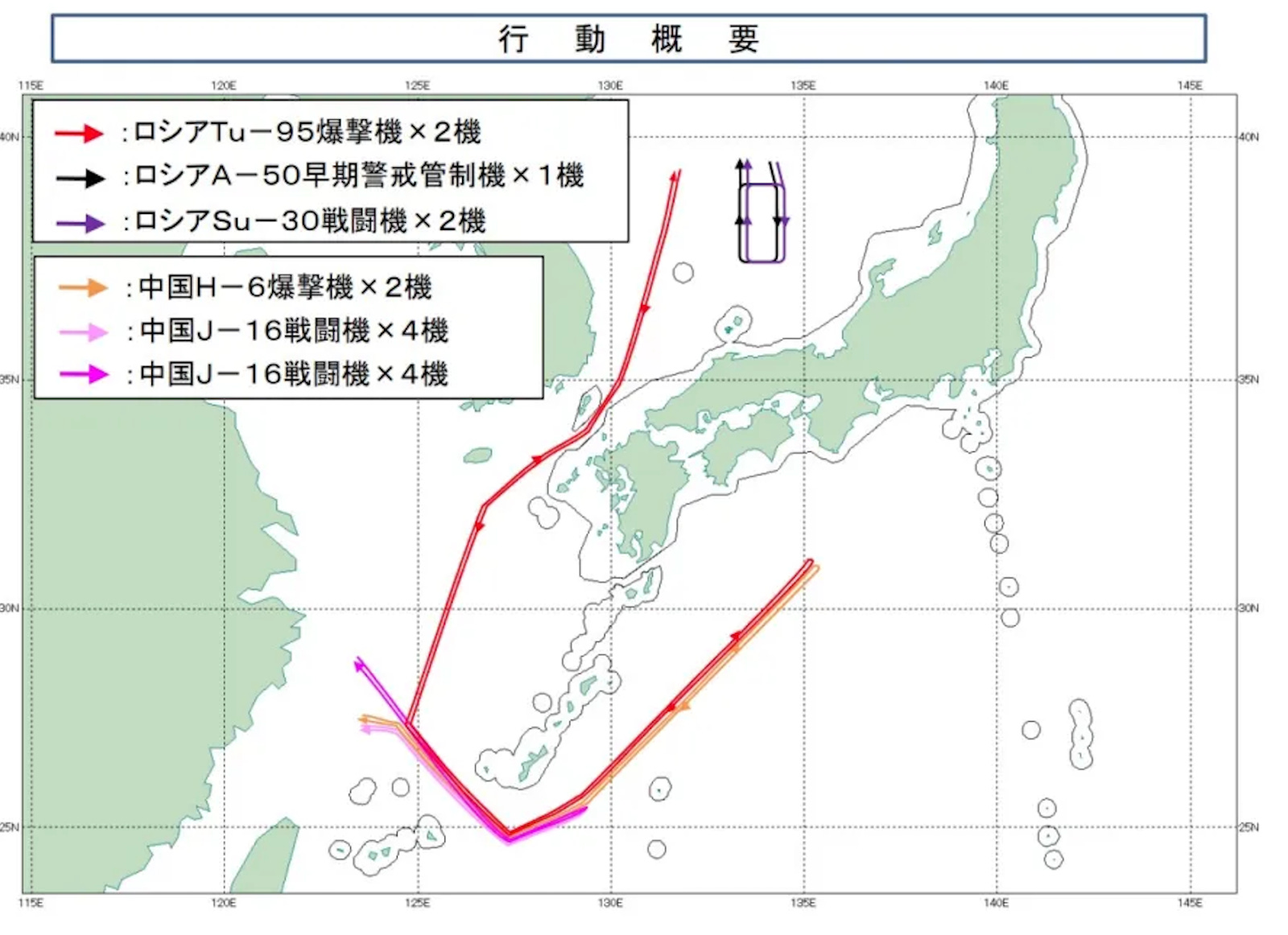
On December 9, the Japanese Self-Defense Forces (SDF) confirmed that the PLA conducted a “joint aerial strategic patrol” with Russian air forces. This included on the Russian side two Russian bombers (Tu-95); an early warning aircraft (A-50); and two fighter aircraft (Su-30); and on the Chinese side two Chinese bombers (H-6) and eight fighter aircraft (J-16). The aircraft rendezvoused in the East China Sea and conducted a long-distance joint flight from the East China Sea to the Pacific off the coast of Shikoku. In addition to those flights, the Japanese said one Russian A-50 and two Russian Su-30s were also spotted north of Japan in the Sea of Japan.
In response, the Japanese military scrambled fighter aircraft from the Air Self-Defense Force’s Southwest Air Defense Force to intercept the joint flights. South Korea also sent fighters in response, as the Chinese-Russian joint flight briefly flew into Korea’s Air Defense Identification Zone (KADIZ).
A spokesperson from the PRC Ministry of National Defense said the joint patrol “showed their resolve and capability to address regional security challenges and safeguard peace and stability,” noting that this was the 10th such mission between the two militaries and was carried out under their “annual cooperation plan.”
CCA Analysis: These joint strategic flights near Japan serve two purposes from Beijing’s perspective. First, the involvement of Russian nuclear-capable bombers exercising alongside PLA aircraft offers a strong strategic signal to Tokyo. They aim to deter what China regards as creeping Japanese “militarism,” assert influence, and challenge the status quo in the East China Sea. And second, they showcase the enhanced interoperability between the Russian and Chinese air forces. The fact that these exercises targeted Japan and, to a small extent, South Korea, is sure to add anxiety in Tokyo and Seoul over a burgeoning Russia-China military alliance in Northeast Asia.
Japan Reported Radar Incidents as the PLA Continued High-Frequency Exercises Nearby
Japan’s Ministry of Defense reported two separate incidents on December 6th, involving the PLA. Tokyo protested that J-15 fighters from the Chinese carrier Liaoning intermittently illuminated Japan’s F-15 fighters with radar over international airspace southeast of Okinawa. Japan called the behavior “dangerous” and argued the radar pattern was inconsistent with routine airborne “surrounding observation.” On the other hand, China rejected Japan’s account, saying Japanese aircrafts “repeatedly approached the PLA Navy’s training sea and airspace and made harassment.”
Japan then reported high flight activity from Liaoning with roughly 100 takeoffs/landings between December 7th and 8th, continuing the rise in PLA operations since last month after PM Takaichi’s comments on a Taiwan contingency. Japan also tracked PLAN ships near its southwest islands on December 11th.
CCA Analysis: Some may recall the January 2013 radar “lock” incidents, when Tokyo claimed a PLAN frigate directed fire-control radar at a Japanese helicopter and later at the destroyer JS Yudachi. Much like today’s rise in China–Japan tensions following Prime Minister Takaichi’s comments on Taiwan, those episodes occurred at the height of the Senkaku/Diaoyu Islands dispute. In both cases, alleged radar illumination appeared during periods of political friction and heightened military activity, pointing to a recurring pattern in which Beijing signals warnings through assertive behavior framed as routine operations.
Yet, such practice may give way to unintended escalations. While fire-control radar sits just below the threshold of kinetic action, it communicates readiness and resolve yet preserving plausible deniability. The problem, however, is that such signaling unfolds in close-range, high-tempo environments, shaped by frequent PLA carrier flight operations and repeated intercepts, which shorten reaction times and limit room for correction. Thus, actions meant to warn or deter can instead amplify uncertainty on both sides, increasing the risk of misjudgment or accident even when neither side intends escalation.
PLA Strengthened Military Ties with Singapore, UAE, and Pakistan through Joint Exercises
December marks a busy month for the PLA’s military diplomacy. In addition to joint exercises with Russia, China also conducted separate drills with Singapore, United Arab Emirates, and Pakistan. While the PLA sent its army to Singapore and Pakistan for counter-terrorism (CT) practice, the PLA Air Force (PLAAF) traveled to the UAE for their third joint air force exercise. Below are a few highlights from these activities.
First, the seventh edition of China-Singapore joint army exercise, Exercise Cooperation, featured a battalion-level field training exercise at Safti City, Singapore’s first high-rise urban training facility - for the first time. The drill employed reconnaissance robots and drones to support simulated encirclement, sniper control, rapid entry, firepower strikes and hostage rescue.
Second, unmanned equipment also featured prominently in the China-Pakistan joint CT exercise Warrior-IX held in Pabbi. In the final phase, Chinese and Pakistani forces conducted a live-fire, full-spectrum field drill involving combined air-land operations. Participating troops employed a range of unmanned systems, including long-endurance drones, drone swarms, loitering munitions, and explosive ordnance disposal robots, to carry out reconnaissance, area control, clearance, and pursuit missions against simulated targets.
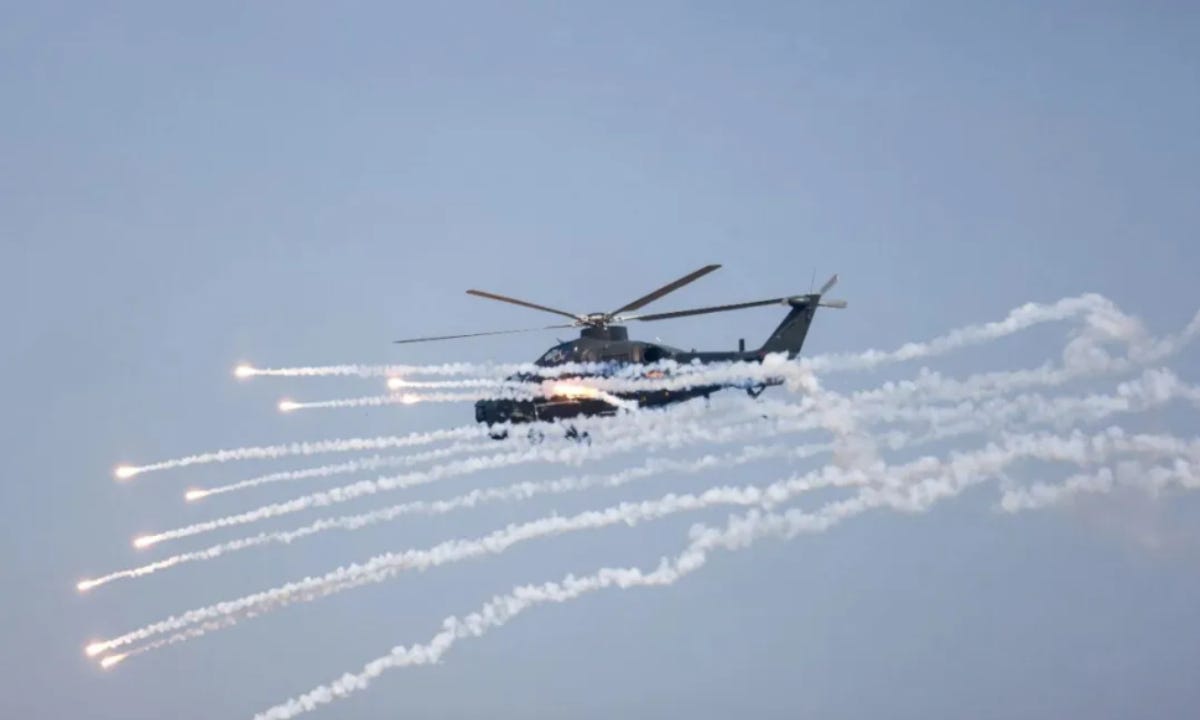
In particular, Z-10 attack helicopters also participated in the exercise. In August, when asked about reports that Pakistan had inducted the Z-10ME, a Chinese Defense Ministry spokesperson stated that “China was willing to share its equipment development achievements with friendly countries.” Against this backdrop, the Z-10’s appearance in a joint exercise may suggest that the PLA is demonstrating the helicopter’s operational capabilities to potential buyers.
Third, unlike the previous two China-UAE joint air force exercises held in Xinjiang, this year’s “Falcon Shield-2025” took place in the UAE for the first time. While training in Xinjiang was previously framed by Chinese officials as offering similar climate conditions, it also carried political signaling, including messaging toward Uyghur activists in China and the Middle East. By deploying the PLAAF to the UAE this year, Beijing further underscores its growing security ties with Abu Dhabi, which may also serve as a form of deterrence toward overseas “separatist” activities.
Beyond political signaling, the China–UAE air force exercises also offer learning opportunities for both sides. For the PLA, the drills provide chances to observe and collect insights on Western-origin platforms. In previous iterations of Falcon Shield, Chinese J-10/J-16 fighters trained alongside French-made Dassault Mirage 2000-9 aircraft - of note given that the Taiwanese military also operates Mirage 2000s. As the UAE and Taiwan have overlaps in aircraft procurement, access to such platforms through joint air drills are critical to the PLA’s understanding of its potential adversaries.
For the UAE, joint drills with the PLA offer opportunities to evaluate Chinese aircraft as potential procurement options. Chinese defense companies have been active participants in the UAE’s major airshows. In 2022, the Gulf state announced plans to procure 12 L-15 trainer jets at UMEX, the UAE’s Unmanned System Exhibition and conference. These aircrafts made their debut with the UAE Air Force at the Dubai Airshow this November. As the UAE continues to diversify its arms suppliers, Chinese platforms may increasingly emerge as viable candidates.
CCA Analysis: Taken together, these December activities point to several evolving trends in the PLA’s joint exercise portfolio. First, counterterrorism and urban operations remain a core entry point for military engagement, particularly with partners in Southeast Asia and South Asia, allowing Beijing to frame cooperation as politically low-risk while still advancing practical training objectives. Second, the consistent integration of unmanned systems across exercises suggests the PLA is using overseas drills to normalize new operational concepts and showcase emerging capabilities in realistic settings. Third, exercises increasingly serve dual diplomatic and industrial functions: platforms such as the Z-10 appear not only as training assets but also as implicit demonstrations to potential buyers. Finally, the geographic diversification of drills—especially the decision to deploy the PLAAF to the UAE—highlights how joint exercises are being used to deepen security ties beyond China’s immediate periphery, while offering the PLA exposure to foreign platforms, operational environments, and force employment practices that may be relevant to future contingencies.
China’s Newest Carrier Makes First Taiwan Strait Transit Amid Sustained PLA Activity
On December 17th, Taiwan’s Ministry of National Defense (MND) said China’s newest aircraft carrier, Fujian, transited the Taiwan Strait on December 16th, marking its first reported transit since entering service in November 2025. Taipei assessed the carrier was likely en route to Shanghai for maintenance, noting that no aircraft was observed on the deck. Beijing has not publicly commented on the transit. On the same day, Taiwan also tracked a PLA “joint combat readiness patrol” involving 23 Chinese warplanes.
In briefing lawmakers, Taiwan’s MND emphasized that Taiwan’s forces are capable of rapid response under a more decentralized command concept, explicitly framed against concerns Beijing could convert “drills” into “combat operations” with little warning. In parallel, regional reporting indicated a surge in China’s maritime presence across East Asian waters, with more than 100 PLA Navy and China Coast Guard vessels reportedly deployed at one point. This region-wide show of force prompted public expressions of concern from both Taiwan and Japan on December 5th.
CCA Analysis: The Fujian’s first reported transit of the Taiwan Strait since entering service appears aimed at normalizing the presence of China’s newest carrier in a politically sensitive corridor. Conducted alongside a same-day PLA “combat readiness patrol,” the move fits a broader pattern in which high-visibility platform deployments are embedded within routine air and maritime activity, reducing their appearance as discrete escalatory events while increasing their cumulative signaling effect.
Taipei’s emphasis on decentralized rapid response reflects concerns that drills could transition into combat operations with limited warning, underscoring the challenge of decision latency under sustained pressure. By shortening its response cycle, Taiwan seeks to match a PLA posture designed to compress warning time, a dynamic that may narrow Beijing’s room for ambiguity while increasing the risk that routine activity triggers faster defensive reactions. Regionally, the reported maritime surge and coordinated Taiwan–Japan concern suggest these dynamics are increasingly extending beyond the Strait itself.
Section II: PLA Strategy
PLA Responses to Trump’s recalibrated China policy and publication of National Security Strategy
On November 4, President Trump released his National Security Strategy (NSS) of the United States, laying out the U.S. administration’s policy and approach to foreign and security policy during his second term. The document offered a stark contrast to the Biden administration’s approach to national security, injecting ideology and renewed emphasis on the Western Hemisphere. It also highlighted a new approach to China, including an intent to pursue a “mutually advantageous economic relationship with China,” despite rhetoric elsewhere in the document about China’s unfair trade practices.
Despite its seemingly conciliatory tone on trade, it featured a more hawkish tone on China’s military ambitions and policy towards Taiwan and the South China Sea. On Taiwan, the document said “deterring a conflict over Taiwan, ideally by preserving military overmatch, is a priority.” It also underscored that the U.S. will “maintain our longstanding declaratory policy on Taiwan, meaning that the United States does not support any unilateral change to the status quo in the Taiwan Strait.” Finally, on the South China Sea, it stated that “strong measures must be developed along with the deterrence necessary to keep those lanes open, free of ‘tolls,’ and not subject to arbitrary closure by one country.”
The PLA took note of the document. In an article in PLA Daily, titled, “The New US National Security Strategy: A Guide to Cost Reduction and Efficiency Improvement for Hegemonism (美国新版国家安全战略:一部霸权主义的“降本增效”指南), one commentator offered a scathing critique of the strategy. Here are a few key passages from the article:
“This seemingly sober and pragmatic shift actually has ulterior motives.”
“The so-called ‘abandonment of global hegemony’ is merely a shift in power from a globally ‘spread’ deployment to a concentration in key regions”
“This is by no means a strategic shift of ‘laying down the butcher’s knife and becoming a Buddha,’ but rather the US withdrawing its overreaching fingers, clenching its fist, and then striking more precisely and forcefully at what it considers its ‘most urgent needs.’ In other words, the US aims to grant its own companies priority in mining and operating resources, turning Latin America into a resource warehouse exclusively for the US, with the intention of firmly controlling Venezuela’s oil, Chile’s lithium mines, Mexico’s rare earth elements, and Brazil’s agricultural products.”
“Its attitude towards its traditional European allies has almost completely broken off relations. The report devoted two and a half pages to lecturing Europe. The report openly states its intention to cultivate resistance forces in Europe and support so-called ‘patriotic European parties.’ This is tantamount to fostering far-right forces in Europe and blatantly interfering in the internal affairs of European countries while still demanding that Europe obediently follow the United States’ lead.”
“These 33 pages are far from a genuine declaration of strategic retrenchment; rather, they are a hegemonic ‘cost-cutting and efficiency-enhancing’ plan.”
“Its adjustment of its Indo-Pacific strategy is not a genuine attempt to ease tensions, but rather a way to allow allies to take the lead in the conflict, calculating how to maintain its regional presence in a lower-cost and more targeted manner.“
“The US has not become more ‘humble’ or more ‘responsible,’ but simply more petty and blatant.”
“Adhering to a ‘zero-sum game’ strategic mindset, the United States has intensified its ‘America First’ mentality into ‘America Only,’ resembling those evil empires in history that ultimately collapsed, and is rushing headlong towards its twilight.”
Days later, a spokesperson for the PRC Ministry of National Defense offered a more diplomatic response to the NSS, with some pointed remarks on Taiwan. On Taiwan, he said “How to resolve the Taiwan issue is a matter for the Chinese people themselves, and brooks no external interference. Any attempt to ‘use Taiwan to contain China’ is futile.”
On the broader topic of China in the NSS, the spokesperson said, “We hope the US will correct its strategic perception of China, meet China halfway, adhere to the principle of non-conflict and non-confrontation, and promote the building of a stable and positive military-to-military relationship based on equality, respect, peaceful coexistence, and mutual respect, adding certainty and positive energy to the development of bilateral relations and world peace and stability.”
CCA Analysis: The PLA, like many elites in China, sees the U.S. through jaundiced eyes. So such a heavy dose of skepticism from PLA observers that the NSS may usher in a new era of American restraint on the global stage is not surprising. What was noteworthy in the commentary was the absence of critiques about the China content in the NSS. Indeed, the author took pains to avoid highlighting the specific rhetoric about Taiwan, the South China Sea, or China’s military ambitions. Instead, the focus was on the hypocritical nature of “hegemony masked as restraint,” suggesting that U.S. foreign policy under Trump is not fundamentally different from previous administrations and that “cost-cutting measures” are simply a method for the U.S. to manipulate allies and partners. It appears that some observers in the PLA are not convinced that the NSS’s reorientation towards threats to the U.S. homeland, and focus on Latin America, will fundamentally change the terminal trajectory of U.S. decline.
Section III: PLA Modernization
China’s New White Paper on Arms Control in 20 Years
China’s November 2025 white paper, China’s Arms Control, Disarmament, and Nonproliferation in the New Era, is the country’s “first comprehensive arms control white paper” in two decades and the third overall after 1995 and 2005. Like the 2005 version, it reiterates Beijing’s long-standing positions, such as commitment to a defensive national defense policy, adherence to no-first-use (NFU), and opposition to extended deterrence. The 2025 document also continues to stress restraint in nuclear development, framing China’s force as maintained at the “lowest level required for national security.”
At the same time, the 2025 white paper introduces notable new aspects. It substantially expands coverage of emerging domains, including outer space, cyber operations, and military applications of artificial intelligence. Compared with 2005, the document is more explicit about ongoing nuclear modernization. Unlike the earlier white paper’s focus on declaratory restraint, it references operational capabilities such as strategic early warning, command and control, survivability, and rapid response. These efforts are framed as necessary to ensure the effectiveness of China’s self-defensive nuclear deterrent and maintain strategic stability.
CCA Analysis: The continuity and change reflected in the 2025 white paper suggest China’s effort to reconcile its expanding nuclear capabilities with self-image as a responsible arms control stakeholder. While Beijing continues to reject arms racing rhetorically, the more detailed discussion of early warning and rapid response reflects a maturing nuclear force structure. The document does not frame these developments as contradictory to arms control; instead, it presents modernization as a prerequisite for stability. This narrative may indicate growing confidence that a larger, more sophisticated arsenal can coexist with declaratory restraint, even as it raises questions for future crisis stability and dialogue with other nuclear powers.
Section IV: PLA Research Highlights
Title: Cognitive Decoding of Threat Intent in Strategic Warning: A Three-Dimensional Analytical Framework Based on Cognitive Schema Theory [战略预警威胁意图认知解码:基于认知图式理论的三维分析框架]
Authors: CHEN Ye [陈烨], MA Xiaojuan [马晓娟], and WEN Jie [闻杰]
Affiliation: College of International Studies, National University of Defense Technology
Publisher: Information Studies: Theory & Application [情报理论与实践]
Date: 2025-12-01
Abstract: [Purpose/significance] This study explores the practical dilemmas faced by intent analysis in strategic warning such as “emphasizing behavior over cognition” and “emphasizing outcomes over cognition.” Addressing the shortcomings of existing frameworks, it constructs an intent analysis framework with explanatory power and operability based on the cognitive schema theory. [Method/process] Through conceptual analysis and theoretical integration, this study clarifies the internal mechanism of intent as an intermediary variable between cognition and action. Combined with the cognitive schema theory, it explores the compatibility between the theory and intent analysis in terms of subject cognition, scenario construction, and meaning interpretation, constructs a three-dimensional analytical framework consisting of situational perception, motivational interpretation and action orientation, and verifies its feasibility through historical case studies. [Result/conclusion] The three-dimensional framework can effectively reveal the generative logic and evolutionary mechanisms of intent. Motivational interpretation parses the generation path of the motivational system to realize cognitive decoding of intent’s action-oriented attributes. Action orientation assesses the feasibility and stability of intent-to-action transformation. The framework provides a systematic and iterative pathway for intent assessment in strategic warning.
DOI: https://link.cnki.net/urlid/11.1762.G3.20251201.1358.002
Title: The Weaponization of Artificial Intelligence and the Evolution of Warfare Forms: An Investigation from the Perspective of Human Security and the Russia–Ukraine Conflict [人工智能武器化与战争形态演变:以人类安全与俄乌冲突为视角的探讨]
Authors: LI Hongzhou1 [李宏洲], and LIU Xiaoyuan2 [刘晓源]
Affiliation: 1. School of International Relations, University of International Business and Economics [对外经济贸易大学国际关系学院]; 2. Zhou Enlai School of Government, Nankai University [南开大学周恩来政府管理学院]
Publisher: Russian, Eastern European & Central Asian Studies [俄罗斯东欧中亚研究]
Date: 2025-12-05
Abstract: The process of the weaponization of artificial intelligence (AI) is accelerating. From the perspective of “human security,” it can be observed that AI is giving rise to new forms of warfare and posing profound challenges to the ethics of just war. On one hand, the weaponized application of AI has transformed traditional warfare forms, blurred the boundary between wartime and peacetime, and made war a routine phenomenon. This has led to permanent changes in the state of human security, manifesting in crises of human subjectivity, erosion of cognitive autonomy, and the militarization of economic life. On the other hand, current intelligent warfare has transcended traditional humanitarian ethical norms, leading to problems such as ambiguous war responsibility, the failure of just war standards, and the generalization of war objectives. The Russia–Ukraine conflict that broke out in 2022 is one of the most typical cases of AI weaponization. From the perspective of human security, this case demonstrates the evolution of warfare forms and the collapse of war norms, reveals the challenges faced by people in both countries, and provides insights into how to reshape war norms. In conclusion, in the era of AI weaponization, balancing the deep contradictions between technological development and the construction of ethical norms requires rebuilding the governance framework and restructuring ethical standards based on the concept of human security.
Section V: PLA Observers
Derek Solen, “Aerial Refueling Added to Flight Academies’ Transition Training Curriculum,” China Aerospace Studies Institute, Dec. 1, 2025, https://www.airuniversity.af.edu/CASI/Display/Article/4344507/aerial-refueling-added-to-flight-academies-transition-training-curriculum/.
Asia Maritime Transparency Initiative, “China’s Spratly ISR and EW Upgrades,” Asia Maritime Transparency Initiative (CSIS), Dec. 2, 2025, https://amti.csis.org/chinas-spratly-isr-and-ew-upgrades/.
Ying Yu Lin and Tzu-Hao Liao, “China Coast Guard Increasingly Assertive,” The Jamestown Foundation, Dec. 4, 2025, https://jamestown.org/china-coast-guard-increasingly-assertive/.
Niharika Mandhana, Daniel Kiss, and Carl Churchill, “See How a Chinese Invasion of Taiwan Could Unfold,” The Wall Street Journal, Dec. 6, 2025, https://www.wsj.com/world/china/how-china-chinese-invasion-taiwan-ba7e3916.
Derek Solen, “Intermediate Flight Training Shifting to Aviation University,” China Aerospace Studies Institute, Dec. 8, 2025, https://www.airuniversity.af.edu/CASI/Display/Article/4344509/intermediate-flight-training-shifting-to-aviation-university/.
Victor Cha, “Creeping Sovereignty? China’s Maritime Structures in the Yellow Sea (West Sea),” Beyond Parallel (CSIS), Dec. 9, 2025, https://beyondparallel.csis.org/creeping-sovereignty-chinas-maritime-structures-in-the-yellow-sea-west-sea/.
Sabine Mokry, “The PRC’s Expanding Arms Control Agenda,” The Jamestown Foundation, Dec. 11, 2025, https://jamestown.org/the-prcs-expanding-arms-control-agenda/.
China Aerospace Studies Institute, “ITOW: Lectures from Course Book on the Taiwan Strait’s Military Geography,” China Aerospace Studies Institute, Dec. 15, 2025, https://www.airuniversity.af.edu/CASI/Display/Article/4300964/itow-lectures-from-course-book-on-the-taiwan-straits-military-geography/.
James Palmer, “What’s It Like to Be a Chinese Soldier?,” Foreign Policy, Dec. 16, 2025, https://foreignpolicy.com/2025/12/16/china-military-pla-soldier-history-veteran/.
Sam Roggeveen, “A red banner year for the PLA,” Lowy Institute, Dec. 17, 2025, https://www.lowyinstitute.org/the-interpreter/red-banner-year-pla.
Shanshan Mei and Dennis J. Blasko, “A Changing World, a Constant Priority: China’s Homeland Defense,” War on the Rocks, Dec. 17, 2025, https://warontherocks.com/2025/12/a-changing-world-a-constant-priority-chinas-homeland-defense/.
Thanks! 🙏