


This issue starts by highlighting the PLA Navy’s unprecedented 7,200-kilometer submarine-launched ballistic missile test into the South Pacific, demonstrating progress toward a more credible and survivable sea-based nuclear deterrent. It also examines China-Russia naval cooperation through “Joint Sea-2026,” which featured air and missile defense, maritime strike, reconnaissance, submarine rescue, and a follow-on Pacific patrol. Finally, we explore a new wave of senior PLA leadership changes, including Xi Jinping’s promotion of two generals and the removal of six senior officers, suggesting that Xi’s anti-corruption campaign is increasingly targeting the residual patronage networks associated with former CMC Vice Chairman Zhang Youxia and is targeting a service (Air Force) that had previously evaded the worst of the purges. Taken together, these developments reveal a PLA that is simultaneously advancing its strategic and joint-operational capabilities while undergoing one of the most consequential leadership upheavals of the Xi era.
PLA Navy Conducts Unprecedented Submarine-launched Missile Test into Pacific
On Monday, July 6, the PLA Navy (PLAN) carried out a rare submarine-launched ballistic missile (SLBM) test with a dummy warhead from a nuclear-powered ballistic missile submarine (SSBN). The missile was reportedly launched from a location south of Guangdong and flew thousands of miles across the Pacific, landing in the South Pacific near Tonga. China described the test as a “routine” military exercise.
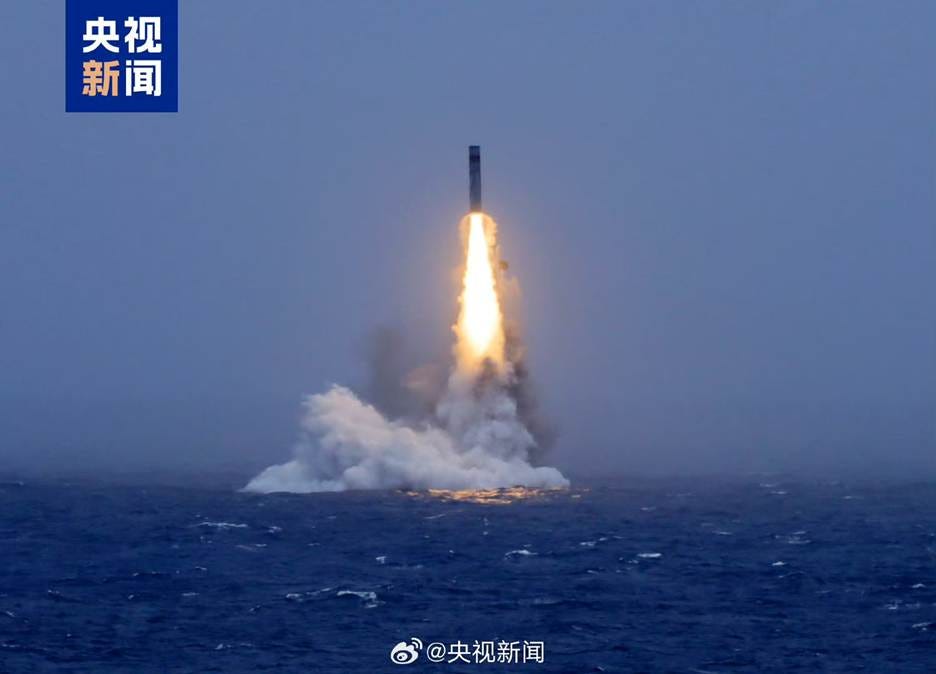
The test is significant because it is the first publicly acknowledged SLBM test with a dummy warhead from the PLAN SSBN that traveled so far into the Pacific (approximately 7,200 kilometers). Previous SLBM tests landed in the Bohai and were not publicly announced.
The test prompted swift condemnation from the U.S., Japan, Australia, New Zealand, and Taiwan, who accused Beijing of “destabilizing” the region.
It appears the missile tested was the JL-2 (巨浪-2), not the JL-3 (巨浪-3). The JL-2 has a maximum range of 7,200–8,000 kilometers, while the JL-3 is 10,000-13,000 kilometers. The range of the missile test is consistent with that of the JL-2.
With this test, the PLAN has shown the capability to target the continental United States from bastions close to Chinese waters, in addition to holding U.S. allies and partners in the region at risk. The launch indicates that China now has an operational sea-based nuclear deterrent and is progressing with its nuclear triad.
CCA Analysis: A test of this range is a major development that indicates that China is moving toward a more survivable and longer-range sea-based nuclear deterrent capability. The launch demonstrates that China’s nuclear deterrent is no longer centered solely on land-based missiles.
This will make Xi Jinping very happy. Conducting a launch of this magnitude implies confidence in China’s submarine crews, command and control, and missile reliability in the context of ongoing political pressure with Xi’s anti-corruption campaign and PLA purges.
It is noteworthy that China pre-notified the United States, Japan, New Zealand, Australia, Papua New Guinea and Taiwan - but reportedly only a few hours in advance and with limited details. The U.S. criticized the short advance notice as “insufficient” and below the notification standards generally maintained by the P5 (meaning the five permanent members of the United Nations Security Council). China publicly stated that it had notified “relevant countries” in advance but did not specify which countries or how much warning they received.
This contrasts with China’s September 25, 2024 ICBM test into the Pacific, when Beijing reportedly notified the United States, Australia, New Zealand, and Japan approximately 24 hours in advance.
The rationale for the test is straightforward: in order to boast a true nuclear triad, China has to be able to demonstrate its missiles work as designed, including reaching the expected range and landing in the pre-determined target zone. In this case, it appears China and the PLAN achieved these objectives.
I wouldn’t read too much into the timing. A launch of this type was likely planned months, maybe years, in advance, and is subject to delays based on weather. Even if China intended to time the launch with a historical event, much depends on submarine crew readiness and weather, which can change at a moment’s notice.
The test will almost certainly facilitate a desire from regional powers, including U.S. allies and partners, to cooperate more, not less, with the U.S., due to greater fear and concern over China’s nuclear modernization trajectory. That is the downside of the launch from Beijing’s perspective. It will bring U.S. allies closer together and fuel concern over China’s military ambitions.
The U.S. State Department’s condemnation of the launch won’t change Beijing’s calculus on arms control or nuclear risk reduction with the United States, or Washington’s efforts to compel Beijing to agree to trilateral arms control treaties with Moscow and Washington. China believes it is still at a strategic disadvantage with the U.S. when it comes to nuclear capabilities, and in that context, will not be persuaded in the short term to agree to any sort of arms control with the U.S.
China and Russia Kick Off Joint Naval Exercises in Qingdao
On July 6, the Chinese and Russian navies launched “Joint Sea-2026” (海上联合-2026), an annual bilateral naval exercise, in Qingdao, China. The exercise is noteworthy because it involves surface combatants, submarines, rescue vessels, and joint air-defense and anti-missile training, and will be followed by a joint China-Russia maritime patrol in the Pacific Ocean.
This year’s exercise consists of an initial harbor phase, followed by at-sea operations beginning July 9. According to Chinese official reporting, the sea phase is taking place in waters and airspace near Qingdao and includes four publicly identified major training areas: joint reconnaissance, air and missile defense, attacks against maritime targets, and joint submarine rescue operations.
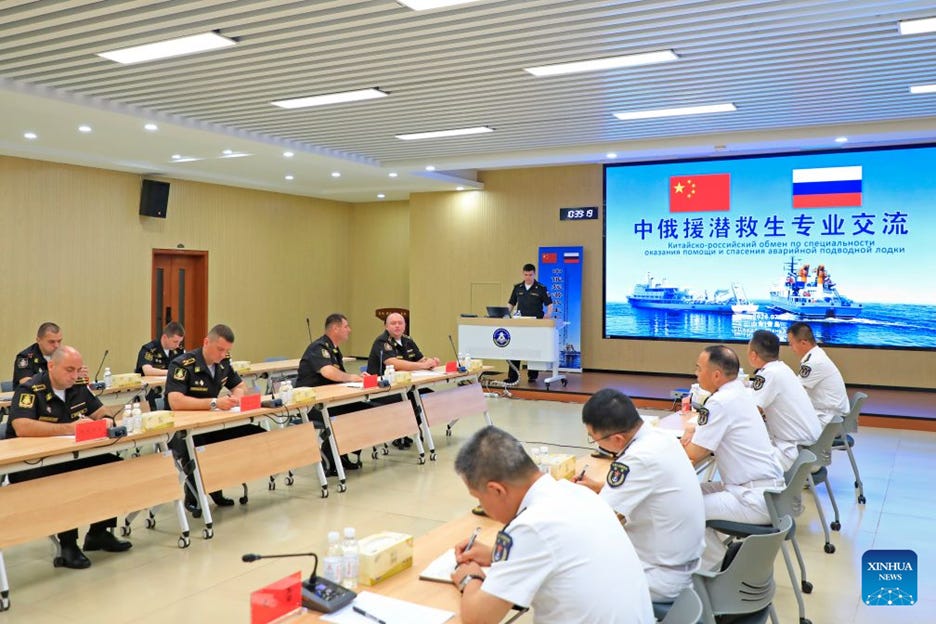
The harbor phase includes command and tactical-coordination activities, professional exchanges on submarine rescue technology and equipment, reciprocal ship visits, and other exchanges. Chinese personnel toured Russian ships, while Russian sailors visited the Chinese destroyer Kaifeng.
Russia has deployed a substantial contingent from its Pacific Fleet, including the Slava-class guided-missile cruiser Varyag, a corvette, a diesel-electric submarine, and the submarine-rescue vessel Igor Belousov. The participation of a Russian submarine and specialized rescue vessel is especially relevant given that joint submarine rescue is one of the exercise’s principal training areas.
On the Chinese side, the publicly identified combatants include the PLAN’s Type 052D guided-missile destroyer Kaifeng; the Type 055 guided-missile destroyer Anshan, the Type 054A guided-missile frigate Wuhu; the Type 903A comprehensive replenishment ship Kekexilihu; the Type 926 submarine support ship Yangchenghu, and one submarine that was not identified.
The publicly announced training program is significant because it goes beyond simple formation sailing or basic communications drills. The principal activities are:
Joint reconnaissance, which includes sharing information and coordinating detection and tracking of simulated threat actors;
Air and missile defense, which is arguably one of the most strategically significant components, requiring integration of sensors, command systems, and defensive weapons across both navies;
Maritime strike operations, which include coordinated attacks against surface targets; and
Joint submarine rescue, which is an area of growing China-Russia technical cooperation and a potentially important indicator of deeper submarine-force interoperability.
During the harbor phase, Chinese and Russian experts specifically discussed submarine rescue technology, equipment development, and maritime training, suggesting that this element is more than a ceremonial addition to the exercise.
Following Joint Sea-2026, some participating Chinese and Russian forces will reportedly proceed into the Pacific Ocean for a joint maritime patrol. The exact patrol route has not yet been publicly specified in the sources available, but previous China-Russia joint patrols have taken their ships through strategically sensitive areas of the western Pacific, including waters near Japan, which at times have unnerved the Japanese military.
This follow-on patrol is as strategically consequential as the exercise itself. A scripted exercise demonstrates interoperability under controlled conditions. But an operational patrol requires the two navies to coordinate over greater distances and periods of time in real-world maritime environments. On July 11, the Global Times posted a video on X of Chinese and Russian submarines conducting at-sea patrols, suggesting a new level of joint undersea warfare training in a live setting.
CCA Analysis: There are four key takeaways from this year’s “Joint Sea-2026” exercise.
First, the exercise demonstrates the continuing institutionalization of China-Russia military cooperation. The two countries have become each other’s most important foreign military exercise partners, and their exercises have progressively expanded in frequency, geographical reach, complexity, and service participation since the mid-2000s.
Second, the air and missile defense component has increased in emphasis. Effective integration of air and missile defense requires coordination in detection, tracking, information sharing, and command and control. The critical analytical question is how much tactical data the two navies actually exchange during the drill. Public information does not suggest that their combat systems are fully integrated. But the scale and scope of bilateral naval exercises is clearly intended to improve their ability to operate alongside one another, and one assumes integration has improved.
Third, Qingdao is home to major elements of China’s Northern Theater Command Navy and is an important PLAN submarine base. Conducting the exercise there and explicitly emphasizing submarine rescue gives Russia access to a strategically important Chinese naval environment that provides both navies an opportunity to deepen cooperation in an area that has traditionally involved particularly sensitive military technologies.
Fourth, the exercise occurs amid a wider surge in Chinese military activity around Taiwan. Taiwan’s National Security Bureau reported an upward trend in Chinese naval movements and said that four Chinese naval formations were operating in the western Pacific as of last week. Taiwanese officials have interpreted expanding China-Russia activity as part of a broader effort to counter the U.S.-led military posture along the First Island Chain.
Thus, the most important aspect of “Joint Sea-2026” is not so much the number of ships involved, but the increasing sophistication and routinization of China-Russia naval cooperation at the tactical level. The inclusion of submarine rescue operations, air and missile defense, maritime strike, reconnaissance, and subsequent operational patrols represents a substantially more meaningful form of cooperation than ceremonial port visits.
At the same time, I would not characterize China and Russia as a fully integrated military alliance. There is still limited public evidence of the kind of deeply integrated command-and-control architecture or joint operational planning associated with the United States and its allies, for example. A better characterization is that China and Russia are developing an increasingly capable, institutionalized, and strategically coordinated military partnership that gives both countries greater capacity to complicate U.S. and allied planning across multiple theaters.
Xi Promotes Two Generals, Including One to CMC; Purges Others
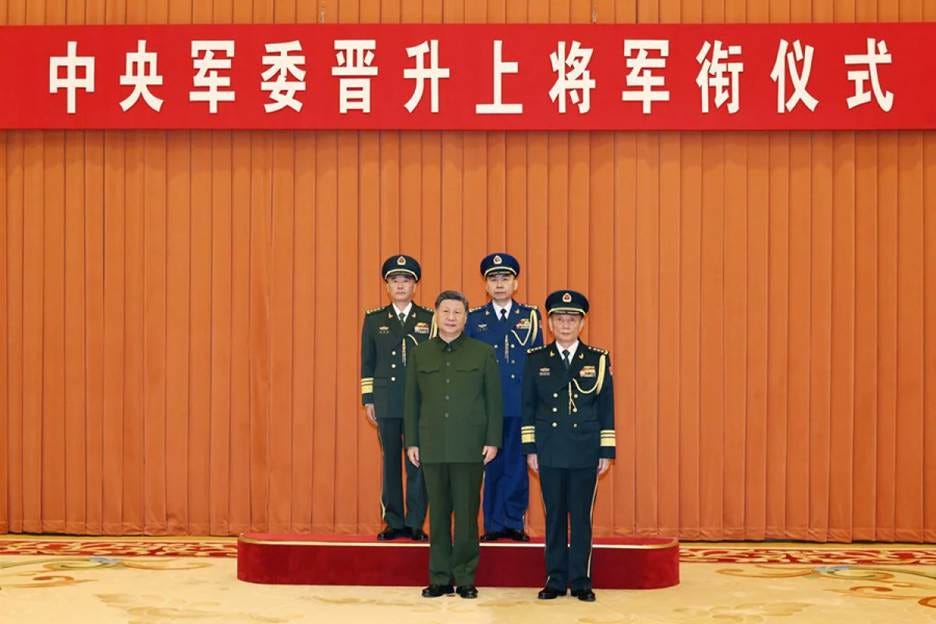
On July 3, Chinese President Xi Jinping promoted two PLA officers to the rank of General, and named a new head of the Central Military Commission (CMC)’s anti-corruption body.
Zhang Shuguang (张曙光), was promoted from the rank of lieutenant general to full general, was named as the new head of the CMC’s Discipline Inspection Commission – the top military anti-corruption body – and director of the CMC’s supervision committee, replacing Zhang Shengmin. Zhang Shuguang spent most of his career as a political officer in the Air Force and Army until working in the DIC under Zhang Shengmin. His elevation to replace Zhang Shengmin is therefore not a surprise, given the patronage relationship that existed prior to his promotion.
Wang Gang (王刚) was also promoted to the rank of full general and takes over as Commander of the PLA Air Force (PLAAF). Wang began his career as a pilot before leading an Air Force division. Wang later served as the director of the Air Force training department (2012–2016), assistant Air Force chief of staff (2016–2019), central theater command Air Force chief of staff (2019–2022), Air Force chief of staff (2022–2025), and deputy Air Force commander (2025–2026).
The announcement comes amid an ongoing anti-corruption campaign that has led to the downfall of many of the most senior figures in the PLA.
PLA analyst Zi Yang covers the backgrounds and significance of these two generals in detail in this piece in The Diplomat.
In other recent developments, on June 26, the National People’s Congress (NPC) Standing Committee announced the removal of six PLA general officers.
Xu Xueqiang (许学强) (PLAAF), head of the Equipment Development Department and director of the Manned Space Program of PRC;
Wang Kangping (王抗平) (PLAAF), deputy commander of the PLA Eastern Theater Command;
Li Fengbiao (李凤彪) (PLAA), political commissar of the Western Theater Command;
Yin Hongxing (尹红星), (PLAA), political commissar of the Southern Theater Command Army;
Guo Puxiao (郭普校), (PLAAF), political commissar of the PLA Air Force; and
Zhang Minghua (张明华), (PLAA), commander of the PLA Cyberspace Force.
What is most noteworthy about these purges is they appear to target the Political Work department of the PLA Air Force (PLAAF) more than in the past. Three are Air Force officers, with three from the PLA Army (PLAA). Up until this point, the PLAAF had largely escaped the full brunt of Xi’s corruption effort, which had disproportionately targeted the PLA Army, Navy, Rocket force, and equipment forces. The Jamestown Foundation’s China Brief has a helpful write-up of these recent purges and their significance.
CCA Analysis: It is safe to say this latest round of purges is focused primarily on dismantling the residual patronage network around the former CMC vice chair Zhang Youxia (张又侠), who became one of Xi’s highest-profile purges of senior PLA officers when he was removed from office on January 24, 2026.
It was also noteworthy that Defense Minister Dong Jun and General Han Shengyan, commander of the Central Theatre Command, were pictured on July 1 seated next to each other at a gala marking the 105th anniversary of the Communist Party’s founding. It was the first time they had been pictured alongside other senior PLA commanders.
This could be an indication that both Dong and Han may be on track to become CMC members as well.
Given the two new promotions to General, if I were to guess, the new CMC leadership in 2027 could include Zhang, Wang, Dong, Han, and Yang Zhibin, who was appointed commander of the Eastern Theatre Command in December. But we will have to wait and see.