


Dr. Phillip C. Saunders is Director of the INSS Center for the Study of Chinese Military Affairs at National Defense University. The views expressed are his own and do not necessarily represent those of National Defense University, the Department of War, or the U.S. government.
PLA Autonomy and the Chinese Military Purges
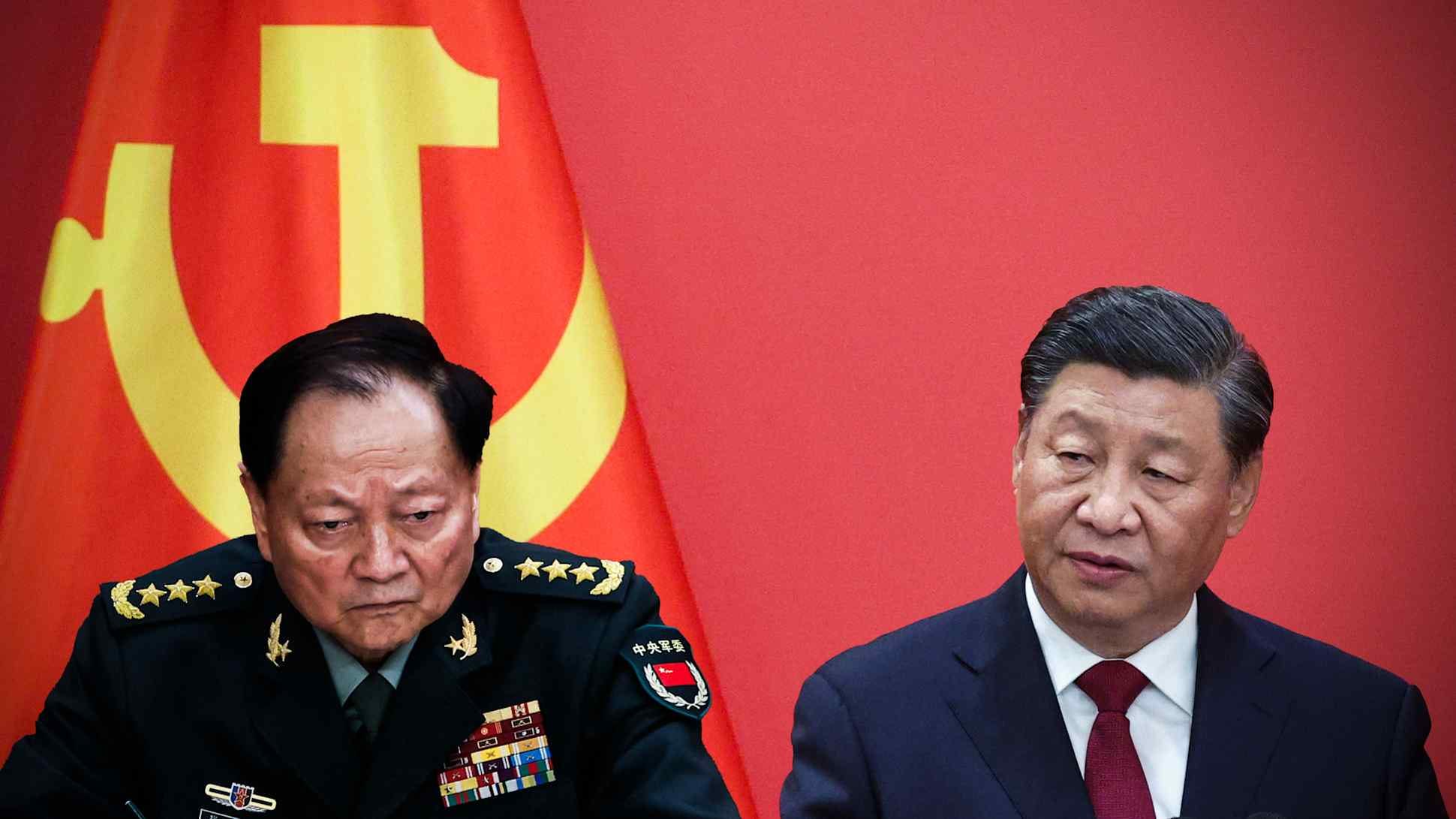
This essay assesses Xi Jinping’s January 2026 purge of Central Military Commission (CMC) Vice-Chair Zhang Youxia and Chief of the Joint Staff Department General Liu Zhenli. The analysis focuses on the extent to which Xi Jinping grants the People’s Liberation Army (PLA) autonomy in the military sphere.
Many analyses of party-army relations in China assume a tacit bargain by which the party grants the PLA a degree of autonomy on military issues in exchange for the military’s political loyalty, sometimes called the “conditional compliance” model.1 Since assuming his role as Chairman of the CMC, Xi has emphasized the power of the CMC’s “Chairman Responsibility System” (CRS) to assert the right to make all military decisions, but in practice, he continued to respect many PLA institutional equities. The current purges of senior PLA leaders, however, suggest that Xi has intervened decisively in the military sphere and that the past assumption of a tacit bargain that grants the PLA a significant degree of autonomy may no longer be valid.
This analysis provides context for understanding Xi’s unprecedented purge of senior PLA officers and concludes by assessing four models that Xi might use to tighten future control over the PLA. It assesses the impact of each on party control and operational effectiveness. None seems likely to solve what may be an unsolvable problem. The most likely approach could involve a mix of younger generals who might be more honest and more politically compliant, and further efforts to strengthen the political work system and monitoring capabilities.
My central argument is that despite Xi Jinping asserting his authority to make military decisions through the CRS, in practice, Xi has continued to respect many PLA institutional equities. The most recent round of purges challenges the validity of this assumption going forward.
The Current Purge in Context
The current purges differ from Xi’s efforts to clean house in the PLA in 2013-15. In addition to targeting rampant corruption, those purges sought to remove generals loyal to Xi’s political rivals, assert control over the PLA, and reduce resistance to ambitious military reform plans.2
Yet there were limits on how far Xi could go.
Joel Wuthnow’s piece in the China Leadership Monitor (finished prior to Zhang Youxia’s purge) compares the first PLA purges with the current round (2023-2026).3 One of Wuthnow’s notable findings is that the earlier round of purges largely left the PLA’s most senior leaders, and especially operational commanders, in place, despite their complicity in widespread corruption. Fang Fenghui, then head of the General Staff Department (the rough equivalent of the CJCS), was the most senior operator purged in the first round.
By contrast, the current round is targeting senior leaders and operational commanders, albeit in a strategic, phased manner that isolated Zhang before moving against him.
Dr. Wuthnow’s earlier work on PLA senior promotions found considerable respect for PLA institutional equities: every part of the force received its proportional share of promotions, and promotions proceeded by age cohort, with generals who waited their turn eventually getting a chance to compete for the top jobs.4
Earlier NDU work, including a Wuthnow & Saunders journal article on party-army relations, found that current institutional arrangements essentially rely on the PLA to police itself through uniformed political commissars and discipline inspectors.5 The 2016 reforms strengthened emphasis on political work and party organs inside the PLA and made institutional changes to strengthen monitoring mechanisms (including the discipline inspection system), but maintained this basic institutional arrangement.6
Given that he couldn’t do everything himself (the CRS runs up against the First Saunders Theorem—“the scarcest resource in government is high-level attention”), Xi was forced to find allies within the PLA that he could trust to carry out his wishes. However, respect for PLA equities meant that Xi had to select from a limited pool of officers with the requisite age and experience, even though most (and maybe all) of them were complicit in widespread corruption (including paying for senior positions). General Zhang Youxia appeared to be the most important of these allies, but obviously, the relationship soured.
This can be understood within a “conditional compliance” model of party-army relations dating back to Deng Xiaoping, which describes a bargaining relationship which gave the PLA considerable autonomy over military affairs in exchange for its political loyalty to the party.
The current purges, which are far more intrusive and comprehensive than the 2013-15 round, end this past respect for PLA institutional equities and may break this tacit bargain with the PLA.
Senior PLA leaders and the operational elite have been targeted so comprehensively that lower-ranking generals have no one left to protect them. (The extent of the purges is illustrated in an interactive infographic in a New York Times article, “China’s Disappearing Generals.”)7
Zhang Shengmin is the last general standing, despite evidence that he was also under investigation for corruption in September 2023.8 One has to conclude that at some point, he flipped on his peers and helped Xi assemble the dirt on other senior generals, though this may not be enough to secure his long-term future.
Although we don’t know the inner workings of party-army relations with much fidelity, I suspect that after the PLA Rocket Force and weapons development system scandals, Xi concluded that the current model of running the PLA through trusted generals and letting the PLA monitor itself wasn’t working. It’s not clear the extent to which this judgement rests on concerns about corruption, political loyalty, responsiveness to his orders, or a failure to meet the demands of producing a modernized, capable military.
Once Xi decided a comprehensive purge of the top brass was necessary to fix these problems (in whatever order of weighting), he executed it strategically to isolate Zhang Youxia and Liu Zhenli before they finally got the axe. He likely tried to convince Zhang that he was part of the solution rather than the ultimate target of the purges.
Four Models for Party-Army Relations
What happens next? Here are four options Xi might consider for managing party-army relations in the future:
1) Keep the same basic structure, but with younger generals who are more capable, less corrupt, and have limited independent power bases. Given that most operational commanders are posted in only one geographic area until they reach deputy corps leader grade, their political networks within (and beyond) the PLA are likely shallower than those of more senior military leaders, possibly making them more compliant. Xi Jinping’s desired mix of “red vs. expert” in new PLA leadership is unclear, but he would still be selecting new PLA leaders from a somewhat dirty pool of candidates.
2) Restructure the political work and supervision/monitoring apparatus to inculcate more loyalty and make officers too scared to be corrupt. The problem is that Xi did this in the 2016 reforms, and it didn’t work.9 We would look for more intrusive monitoring of communications and activities of generals, tighter scrutiny of anything involving contracts and money, and periodic rotation of assignments so that the political commissars and discipline inspection commission officers don’t have established ties with those they are supposed to be monitoring. All of this was tried before and proved insufficient, likely because the supposed monitors were eventually corrupted (probably including Zhong Shaojun, Xi’s longtime civilian aide and eyes and ears inside the CMC General Office, and Admiral Miao Hua, who had primary responsibility for maintaining political dossiers and recommending senior officers for promotion in his capacity as Director of the CMC Political Work Department until he was purged in November 2024).10 Xi would need to either get personally involved in making senior officer promotion decisions or find a trusted officer who would implement his preferences.
3) “Permanent Revolution” with periodic transfers and purges of senior brass so that they are never in place long enough, or confident enough, to disobey or engage in corruption. Xi Jinping has been talking about “self-revolution” within the party since at least 2024. The problem is that senior officers would not be in place long enough to learn their jobs, build relations with new peers and subordinates, and operate effectively in a conflict. Moreover, they would always be wondering when the axe might fall, disrupting their focus on their military responsibilities. This solution prioritizes political control at the expense of operational effectiveness (which is something Xi also wants). It might also prove counter-productive by stimulating scared generals to seek to remove Xi.
4) Get outside monitors to watch the PLA and potentially compete with its internal security mission. Many authoritarian systems rely on multiple and competing mechanisms to manage domestic security and monitor their militaries, but this solution has been off the table in China due to PLA autonomy. The CMC Discipline Inspection Commission was intended to monitor PLA party committees but proved ineffective in preventing wide-scale corruption.11 Xi could set up the Ministry of State Security (MSS), the Ministry of Public Security (MPS), or both as monitors of PLA loyalty, with intrusive access into PLA communications and operations. (Secrecy and control over military information have historically been a key source of PLA bureaucratic power.)12 Xi could rely more on the local National Security Commission system and provincial military committees to monitor the PLA at the provincial/major city level. A variant would use independent media and legislative monitoring to watch the PLA, but this is highly unlikely given Xi’s emphasis on party control. Xi could also give the People’s Armed Police (PAP), MSS, and/or MPS more responsibility for domestic security.
None of these solutions is necessarily off the table, but none seem likely to solve what may be an unsolvable problem.
A Prediction
If pressed to predict, the most likely approach would involve a mix of younger generals who might be more honest and more compliant and modest efforts to strengthen the political work system and monitoring capabilities. Xi will probably also have to personally devote more time to watching the PLA.
Recent PLA Daily editorials appear intended to explain the purges and to convey the new reality to remaining PLA leaders, couching the purges as necessary to achieve shared modernization goals.13 The purges will also provide new professional opportunities for younger generals with the requisite political loyalty and operational skills (in whatever ratio Xi sees as best).14 Xi’s remarks to PLA and PAP delegates at the National People’s Congress suggest that political loyalty will be an essential criterion.15
That raises the question of how Xi, or a trusted subordinate (who?) will make those evaluations and select new PLA leadership. It is also unclear whether any of the senior officers currently under investigation will come out the other side with a clean bill of health and possible promotion to the many senior positions that are currently vacant.
This wholesale purge of the PLA senior ranks will be very disruptive and have a negative impact on PLA readiness and ability to perform the coordinated tasks needed for large-scale military operations such as an invasion of Taiwan.16 The impact on smaller-scale operations and military training will likely be much more limited.17 Over the medium term, PLA capabilities may improve as younger, better-educated officers who have reached professional maturity inside the theater command system and who have more experience with joint operations move into senior positions.18
A longer-term question is how party-army relations will evolve after Xi is gone. Xi is currently at the height of his power, as demonstrated by his ability to remove so much of the senior PLA leadership. A future successor would almost certainly have less power within the party, less knowledge of military issues, and a weaker network of PLA contacts, making it hard to assert and maintain control over the military. This might prompt a recalibration of the conditional compliance bargain, which cedes more autonomy back to the PLA.
Ellis Joffe originated the term “conditional compliance” and James C. Mulvenon elaborated what a conditional compliance model might look like. See Mulvenon, “China: Conditional Compliance,” in Military Professionalism in Asia: Conceptual and Empirical Perspectives, ed. Muthiah Alagappa (Honolulu, HI: East-West Center, 2002),
317–335, and James C. Mulvenon, “Straining against the Yoke? Civil-Military Relations in China after
the Seventeenth Party Congress,” in China’s Changing Political Landscape: Prospects for Democracy, ed.
Cheng Li (Washington, DC: Brookings Institution Press, 2008), 267–282. For a critical review of the party-army relations literature, see Michael Kiselycznyk and Phillip C. Saunders, Civil-Military Relations in China: Assessing the PLA’s Role in Elite Politics, China Strategic Perspectives 2 (August 2010), 18-19; also see Phillip C. Saunders and Andrew Scobell, eds., PLA Influence on China’s National Security Policymaking (Stanford, CA: Stanford University Press, 2015).
Phillip C. Saunders and Joel Wuthnow, “Large and In Charge: Civil-Military Relations under Xi Jinping,” in Phillip C. Saunders, et al., eds., Chairman Xi Remakes the PLA: Assessing Chinese Military Reforms (Washington, DC: National Defense University Press, 2019), 537-544.
Joel Wuthnow, “Why Is Xi Still Purging His Generals?” China Leadership Monitor, March 2026.
Joel Wuthnow, Gray Dragons: Assessing China’s Senior Military Leadership, China Strategic Perspectives 16 (September 2022).
Joel Wuthnow and Dr. Phillip C. Saunders, “More Red but Still Expert: Party-Army Relations under Xi Jinping,” Journal of Contemporary China 34, No. 156, 2025, 919-933.
Joel Wuthnow and Phillip C. Saunders, Chinese Military Reform in the Age of Xi Jinping: Drivers, Challenges, and Implications, China Strategic Perspectives 10 (March 2017).
Amy Chang Chien, Agnes Chang and Chris Buckley, “China’s Disappearing Generals,” New York Times, February 3, 2026, https://www.nytimes.com/interactive/2026/02/03/world/asia/china-xi-military-purge.html. Also see Bonny Lin, Brian Hart, Leon Li, Suyash Desai, Truly Tinsley, Linda Yang, Feifei Hung, “The Purges Within China’s Military Are Even Deeper Than You Think,” CSIS China Power Project, February 24, 2026, https://chinapower.csis.org/china-pla-military-purges/.
Drew Thompson, “The demise of Zhang Youxia hits different,” Substack, January 26, 2026.
See Saunders and Wuthnow, “Large and In Charge,” 530-537.
See Jonathan A. Czin, “Thoughts on the political demise of Miao Hua,” Brookings, February 18, 2025, https://www.brookings.edu/articles/thoughts-on-the-political-demise-of-miao-hua/.
The fact that Zhang Shengmin appears to retain the position of Secretary of the CMC Discipline Inspection Commission despite his promotion to CMC Vice-Chair could mean that the commission will get another chance to play its intended role.
Isaac B. Kardon and Phillip C. Saunders, “Reconsidering the PLA as an Interest Group” in PLA Influence on China’s National Security Policymaking, 42-43.
“Firmly believe in the inevitable victory against corruption and the inevitable achievement of a strong military” [坚定反腐必胜、强军必成的信念信心], PLA Daily, January 31, 2026. For a partial translation, see Manoj Kewalramani, Tracking People’s Daily Substack, “PLA Daily Commentary on Purge of Zhang Youxia & Liu Zhenli: ‘Special Tempering’ Underway; ‘Diseased Trees’ Being Uprooted; & New-Era Officers to Take Charge,” January 31, 2026,

Kewalramani, “PLA Daily Commentary on Purge of Zhang Youxia & Liu Zhenli.”
“China’s Xi calls for political loyalty in the military as anti-corruption purge widens,” Associated Press, March 7, 2026, https://apnews.com/article/china-congress-military-purge-jinping-1f13700eec749f9476810a878368a62a.
Phillip C. Saunders and Joel Wuthnow, “Xi Can’t Trust His Own Military,” New York Times, May 6, 2025 and Phillip C. Saunders, “Xi’s Military Purges: Causes and Consequences will make him wary of invading Taiwan,” The Interpreter, February 5, 2026.
Andrew S. Erikson, “Targeting Taiwan Under Xi: China’s Military Forest Flourishing Despite Toppling Trees,” Fairbank Center for Chinese Studies, February 12, 2026.
See Joel Wuthnow, “The Danger in the Middle: Will Xi’s Purges Increase the Risk of War?” War on the Rocks, February 24, 2026, https://warontherocks.com/2026/02/the-danger-in-the-middle-will-xis-purges-increase-the-risk-of-war/.
This is not only about military purges, but about how power is organized in highly centralized systems.
When authority is concentrated, loyalty often outweighs competence—and instability becomes structural rather than accidental.
In such systems, officials derive their position and security less from institutions than from personal dependence, making loyalty the primary currency of survival.