



In 1784, before America had a president or even a constitution, the merchant ship Empress of China sailed from New York toward the Pearl River. Samuel Shaw, later America’s first consul to China, recalled how warmly the Chinese welcomed trade with the young republic.
I was struck by Treasury Secretary Scott Bessent’s retelling of this story at the National Committee on U.S.-China Relations gala last week. Commerce came before diplomacy: Americans and Chinese found reasons to work together long before their governments did.
Nearly two and a half centuries later, our two countries are more deeply connected, more powerful, and more suspicious of one another.
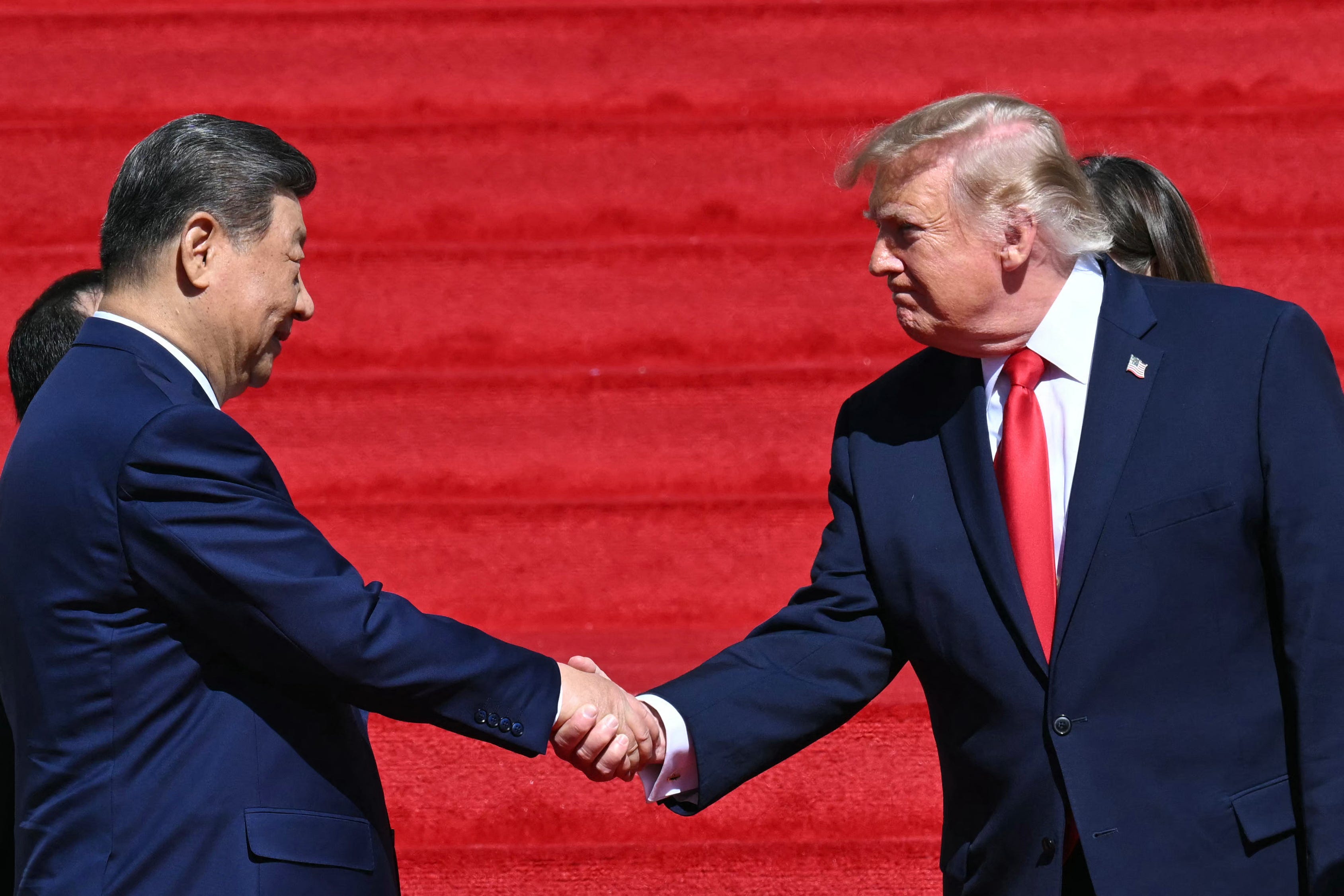
The Trump–Xi meeting in Shenzhen, their third this year, is another chance to steady the relationship. But as Bessent observed, what matters more than their frequency is the understanding they help establish.
That brings us to the central question: What kind of stability is emerging between Washington and Beijing?
Stability means different things in each capital. For Beijing, it is about more than keeping U.S.-China tensions under control. As David Shullman and Lobsang Tsering explore, Beijing sees opportunities to advance its interests while navigating pressures ahead of China’s 21st Party Congress in 2027.
History helps explain an important dimension of Beijing’s approach: international status. In the PRC historical narrative, Yalta is where Roosevelt, Churchill, and Stalin settled China’s future in 1945 without China in the room, at the cost of Outer Mongolia. Eight decades later, in Shenzhen, Xi is expected to host the first-ever meeting of American, Russian, and Chinese leaders. The meeting also fits a story Beijing tells at every opportunity: China fought as one of the Allies against fascism, bore the brunt of Japan’s invasion, and helped build the postwar order. At home, that story draws on deep anti-Japanese sentiment. Internationally, it carries a quieter message for Washington: in 1945, China and the United States were allies and among the victors. In Beijing’s eyes, China is no longer the subject of great-power bargaining but its host — and on the road to the 21st Party Congress, that image strengthens Xi’s hand at home.
For Washington, stability is harder to define because no single actor controls it. The midterms handed Democrats both chambers of Congress. A president may reach an understanding with his counterpart at the APEC meeting, but Congress, the bureaucracy, businesses, and allies will shape what follows.
Economics offers both the strongest incentive for accommodation and a persistent source of friction. Bessent, borrowing from Ray Dalio, called for “a big, beautiful rebalancing”: America must produce more of what it consumes, and China must consume more of what it produces.
Yet rebalancing cannot be achieved through diplomacy alone. As Wendy Cutler points out, rare earths keep returning to the negotiating table despite repeated commitments. The test is whether the Busan agreements can become predictable, lasting arrangements.
Technology may prove an even harder test. The turmoil at Nvidia, culminating in Jensen Huang’s resignation, has renewed pressure for tighter export controls, even as the Megaspeed case shows how hard they are to enforce. As Lizzi C. Lee asks, in protecting its technological advantages, might the United States weaken the very ecosystems that make them possible?
Still, there is room for something constructive. Advanced AI brings risks that respect no borders; a major cyberattack or an autonomous agent beyond human control would hardly distinguish American from Chinese interests. The bilateral channel for “super intelligence” incidents, agreed in September, is a modest but meaningful start. As Alvin W. Graylin argues, its value depends on whether officials know whom to call, what to report, and how to respond when something goes wrong.
Taiwan remains a potential flashpoint, as Lyle Morris reminds us. And as Sungmin Cho argues, any U.S.-China understanding must take seriously the security concerns of others in the region. Stability between two great powers should not come at the cost of greater uncertainty for everyone else.
These seven essays do not always agree. That is their strength. We need more serious debate and fewer assumptions about what the other side must be thinking.
For me, the question is not whether the United States and China can trust each other completely. That is neither realistic nor necessary. The practical task is to go beyond unreasonable suspicion and create enough predictability to manage competition, enough clarity to avoid miscalculation, and enough political space to cooperate where interests genuinely converge.
Xi’s Narrowing Window of Opportunity

David Shullman
Until last week, Xi Jinping was approaching the APEC summit with greater confidence in China’s ability to shape Washington’s strategic choices than at any point in the modern era of U.S.-China competition. China’s successful weaponization of critical mineral supply chains, which prompted a dramatic reversal in Trump’s confrontational approach to China last year, has continued to reverberate. Having demonstrated China’s ability to withstand U.S. pressure and impose substantial costs of its own, Xi has perceived an opportunity to turn Trump’s pursuit of stability and perceived acceptance of China as an equal into lasting strategic advantage during Trump’s remaining time in office.
As attention to the scandal around Jensen Huang and Nvidia shifts towards focus on the Trump administration’s lax implementation of controls on advanced technology exports to China, Xi’s opportunity to capitalize on Trump’s prioritization of stability may be quickly evaporating.
Expectations for significant deliverables from a Xi-Trump meeting at APEC were already low. Xi will use his time with Trump to try to mitigate fallout from the Nvidia developments and keep on track the consolidation of a new normal in which Washington increasingly restrains its competition with Beijing, consistent with its embrace of China’s preferred framework for a “constructive relationship of strategic stability.” To that end, Beijing may use the meeting to seek an extension of the countries’ trade truce beyond January, rather than on the margins of next month’s G20 meeting—but given how fragile the truce is, extension may need to wait. Aspirations to make fulfillment of China’s outstanding rare earth licensing commitments conditional on a standstill or even further relaxation of U.S. technology controls are unrealistic at a time when there will be increased pressure in Washington to strengthen controls following the Nvidia developments. Xi will likely underscore that tougher controls will put the truce and broader stability at risk and lead to curtailed shipments of critical minerals.
Meanwhile, Beijing will continue working to deepen global dependencies on Chinese supply chains, creating potential new sources of leverage in intermediate goods ranging from pharmaceutical ingredients and chemicals to printed circuit boards and foundational semiconductors. Indeed, the larger story is what Xi hopes to accomplish during Trump’s remaining time in office: accelerating China’s technological self-reliance, deepening global dependencies on Chinese industries and technologies, and expanding its coercive leverage over the United States and its allies.
Perhaps most importantly, Xi still aspires to secure an enduring reduction in U.S. support for Taiwan as part of Washington’s acceptance of the new “constructive strategic stability” framework. Beijing interprets the framework’s emphasis on mutual “respect” as requiring greater U.S. accommodation of China’s core interests, foremost among them Taiwan, and has explicitly linked Washington’s handling of the issue to the stability of the overall relationship. Xi will seek to translate that interpretation into reduced U.S. defense support for Taiwan, beginning with further delays to a long-promised $14 billion arms package.
Xi may still calculate that Trump’s weakened position following the U.S. midterms, combined with his desire to cement a diplomatic legacy, creates a unique opportunity to reshape the terms of strategic competition. Leader-to-leader engagement at APEC provides a chance to dissuade Trump from acceding to demands for tougher policies after the Nvidia revelations that do not align with Beijing’s plans. With China’s 21st Party Congress approaching in the latter half of 2027 and the prospect of a tougher U.S. approach under a successor administration, Beijing has strong incentives to lock in gains while this window remains open.
Xi’s Domestic Calculus at Shenzhen

Lobsang Tsering
Xi Jinping enters the Shenzhen APEC summit politically dominant but under pressure to demonstrate that centralized leadership can deliver economic results and effective governance. That combination defines his bargaining position: secure enough to make tactical concessions without serious domestic blowback but pressed enough to seek stability with the United States, and unwilling to concede anything touching the foundations of his governing model. Xi needs a productive meeting with President Trump that he can present at home as strength.
The Fifth Plenum illustrated the pressure. Only 279 Central Committee members and alternates attended—about 74 percent of the initial total membership elected in 2022—and the plenum confirmed 33 expulsions, including senior civilian and military leaders. The CCP’s new decision on stricter Party governance emphasized political loyalty, cadre management, effective policy implementation, and anti-corruption. Approximately 14 years into his rule, Xi still faces challenges around the Party’s governing capacity, even as Beijing celebrates China’s “two miracles“: rapid economic development and long-term social stability. As the leadership rebuilds its own internal capacity, it does not want any external crisis and wants to demonstrate economic results to validate its model.
The 21st Party Congress will likely reinforce Xi’s authority, institutionalize his governing model, and set priorities on national security, technological self-reliance, supply chain resilience, and food and energy security. As the 15th Five-Year Plan nears the end of its first year, Xi must show that stronger Party leadership can simultaneously deliver political stability, economic development, and national security. From Shenzhen, therefore, Xi needs to gain more “breathing room” for his domestic agenda—perhaps in the form of a trade truce extending past January 10, implementation of tariff reductions, restraint on new U.S. technology controls, and more favorable language on Taiwan.
Xi will likely pursue tactical flexibility without strategic retreat. He may accept selective compromises on trade arrangements, implementation timelines, and crisis-management mechanisms, while defending China’s positions on Taiwan, sovereignty, its Party-led political-economic system, and long-term technological autonomy.
Three developments merit attention. First, whether summit agreements deliver concrete economic benefits for China. Second, whether cooperation mechanisms agreed upon between the United States and China endure. Third, Beijing’s leadership appointments — especially in diplomacy and economic policymaking — will provide clues as to how Xi assesses China’s evolving external strategic environment and how he seeks to balance loyalty, competence, and performance ahead of the 21st Party Congress in 2027.
Beijing will portray any agreement with President Trump as evidence that Xi can defend China’s interests while managing great-power competition from a position of strength. Xi will use tactical flexibility against the United States to secure external stability ahead of the 21st Party Congress but not compromise on anything structural or foundational regarding his governing model.
U.S.-China Trade and Investment: How Long Can the Truce Last?

Wendy Cutler
While the Trump administration has made trade a priority for U.S.-China engagement, in reality the work agenda is modest, with no breakthroughs expected at the upcoming Shenzhen summit. Rather than exploring new areas of potential cooperation, the focus for the relationship now is keeping intact the fragile trade truce, which was reached last November and extended to January 10, 2027.
The United States continues to press China to restore shipments of critical minerals, rare earths, and magnets back to previous levels. China’s exports of these products are closer to two-thirds of what Washington believed it had bargained for, and shortages continue to impact a range of U.S. companies. While China just renewed its licensing of these strategic products, thereby avoiding a showdown, time will tell if exports will now rise. Moreover, although Chinese purchases of U.S. soybeans are on track to meet agreed-upon levels, U.S. exports of other agricultural products valued at $17 billion lag way behind this commitment. In turn, Beijing continues to remind Washington that the key to keeping the truce alive is to avoid implementing more controls on technology exports, an area where many in Congress favor stricter action and the Nvidia developments are already fueling calls for tougher restrictions. Furthermore, the United States has now introduced the lever of withholding exports of key aircraft parts to China in an effort to get Beijing to move on critical minerals and agriculture. In light of these complexities, coupled with a deadline coming after the new year, it’s unlikely that another truce rollover will be announced in Shenzhen.
As negotiators work through the more prickly elements of the trade truce, they are also trying to put a positive spin on the two new bilateral Boards announced last May—one on trade, and the other on investment. In September, the mandate and operation of the Board of Trade was announced, including the announcement of a list of non-sensitive products valued at $60 billion that could be subject to tariff reductions. However, neither side has initiated the necessary domestic procedures to implement these tariff cuts, and the United States in particular has shown no urgency to do so. Sensing this U.S. slow walk, China has recently said that these tariff cuts must be implemented as part of any trade truce extension. The Board of Trade met virtually last Friday but readouts are vague on what, if any, progress was made.
While a vague mandate was announced in September to discuss investment-related issues, impediments, and opportunities, it remains unclear when, how, and what outcomes the Board of Investment may pursue. Undoubtedly, the lack of progress reflects differing views in the Trump administration and Congress on whether Washington should selectively welcome Chinese investment into the United States and if so, in which sectors and under what conditions. That said, it’s possible that a handful of limited investment deals may be announced in Shenzhen.
The bilateral trade and investment work will continue to be a slog, with minimal outcomes expected this year and even beyond. Both sides are more focused on managing the relationship versus strengthening and expanding it. The U.S. midterm election outcomes may result in more Congressional oversight on the terms and direction of U.S.-China economic relations, particularly if it looks like Trump is being too accommodating towards Beijing.
Meanwhile, U.S. partners will be watching developments closely, including any possible tariff cuts for Chinese non-sensitive imports which may disadvantage them. While stabilization in the U.S.-China relationship is welcome, our partners are also concerned about U.S. demands that they get tougher on China, putting many of them in a difficult spot.
Why Neither Side Wants to Overshoot on Technology but Still Might

Lizzi C. Lee
Technology is the most difficult issue to manage in the U.S.-China relationship. The Nvidia episode and the Democratic-controlled Congress following the midterms are likely to intensify the momentum for tighter export controls. Yet, the two ecosystems are deeply intertwined across fields — from AI to biotech — and across stages of innovation. Both countries are also buckled in for long-term strategic rivalry. Neither reality is going away.
The recent moves — Beijing’s proposed technology export restrictions and Washington’s proposed expansion of outbound investment controls — illustrate this tension. Both remain proposals with comments closing on November 15 and December 7, respectively. Only MOFCOM’s pre-export registration is in force. A closer reading of the fine print and bureaucratic processes, in other words, reveals that neither side wants to, nor is prepared to overshoot. U.S. Treasury faces industry pressures to narrow its rules before finalization, while Beijing has carved out paths to preserve everything from the global diffusion of open-weight AI models to licensing and business development deals critical to the long-term health of its biotech industry.
At least four fundamental mismatches complicate the task of managing the U.S.-China technological competition.
First, the two domestic systems operate very differently. Washington’s authority is dispersed, with a vibrant private sector that does not always walk in lockstep with it. Beijing’s centralized authority does not mean uniform incentives or centralized implementation across competing ministries, local governments, and firms.
Second, security and innovation are both priorities for Beijing and for Washington, and they often pull in opposite directions. China’s tightening of AI controls risks complicating the timing and scope of future model releases, while broad-based U.S. investment restrictions on Chinese biotech risk cutting American firms off from cutting-edge developments in China, a critical part of global innovation. Such U.S. investment restrictions would also encourage Chinese biotech companies to reroute toward Europe, Asia, and the Middle East, weakening America’s centrality to global drug development.
Third, there is a timeline mismatch. What makes perfect sense today may look misguided five years from now. National security has become the politically unassailable priority for both countries. With election cycles in the United States, and China’s equivalent, the Party Congress, next year, officials get credit for being tough, not for appearing soft and preserving cooperation. But the costs of overreach — a fundamental weakening of the innovation ecosystem’s underlying strengths — often only become visible years later.
Fourth, strategic rivalry encourages each side to interpret even routine regulatory updates as retaliation or escalation, inviting further rounds of both. Beijing’s October 26 draft trade-secret countermeasures and Taiwan’s planned tightening of AI-chip export controls — designed to align more closely with U.S. restrictions — add further complexity.
Obviously, none of these mismatches will be resolved in Shenzhen. But ultimately, if the truce is to stick, both sides need to think more innovatively.
The solution is as much an institutional design problem as a geopolitical one. It requires political courage to resist short-term scorekeeping, but also the wisdom to align incentives. We need institutionalized channels of communication between industry and government, and between the two countries, with built-in reassessments of technology controls as technologies themselves change.
Technology is evolving fast. The politics governing it needs to become considerably smarter.
Will the AI Safety Channel Work?

Alvin Wang Graylin
The White House September 25 fact sheet promised not only dialogue between the United States and China on the risks and benefits of artificial intelligence, but also a U.S.-China AI incident channel. Seven weeks on, there have been no published notification thresholds, named officials, or categories of reportable incidents. My judgment: the next round keeps the dialogue alive but marks real progress only if it yields concrete procedures rather than communiqués.
In the Wall Street Journal, Secretary Bessent discussed steps the administration is already taking to reduce AI risk, including voluntary model testing, vulnerability sharing, major-incident reporting by top American AI labs, and sharing frontier capabilities with selected partners. These are great starts and welcome steps. But Bessent also stated, “only by staying ahead” can the United States reap the benefits of the technology and remain safe, emphasizing the threat from “foreign SI models.” But that framing may oversimplify the problem: staying ahead in frontier capabilities does not by itself make widely available open-weight models safer when their safeguards can be removed — a challenge that requires coordination with China and others.
That problem is especially acute in cybersecurity, where offense always has an asymmetric advantage: an attacker only needs to find one vulnerability while defense must patch them all, and patches take weeks or months to propagate. Sharing vulnerabilities with only a select small set of partners also leaves tens of millions of companies and institutions exposed. In recent attacks, open-weight models were also used to defend from attackers because U.S. frontier models’ guardrails limited their use. Reducing long-term AI-enabled cyber risks, therefore, requires working with other nations, not simply intensifying an AI race.
The South Korean bank case illustrates why. An independent third party in China reportedly used the open-source Chinese cyber tool ARTEX with American and Chinese AI models — Claude and DeepSeek — to breach at least nine South Korean banks. This is exactly the kind of case for which an incident channel should exist. The bigger risk to the world today is less state-to-state offensive use, but rather bad-actor misuse. Addressing that requires working together to reduce the offensive capabilities of open-weight models, greater transparency in multilateral incident reporting across borders and also vulnerability sharing between governments of all nations.
At the World Internet Conference in Wuzhen on November 3, I heard Premier Li Qiang insist AI stay under human control and pledge openness. Open-weight models, which others can run and modify, are central to China’s national AI strategy; Alibaba’s Joe Tsai, whose Qwen leads open-model adoption, called open source AI’s only sustainable path. But Chinese labs are already preemptively adding its own guardrails in response to the new state-issued AI safety framework and recent elevated government concerns. Moonshot reportedly stripped some cyber data from Kimi K3.1 Pro’s training and Tencent limited Hy4 cybersecurity training to defensive data, resulting in both releasing models with reduced cyber and bio offense capabilities.
Mistrust runs both ways. Washington doubts Beijing’s transparency and the risks posed by Chinese models, while Chinese regulators I met in Wuzhen see U.S. export controls as commercial containment and fear that safety findings could justify further restrictions. The cheapest credible signal is a mutually agreed technical channel between U.S. and Chinese cyber-response teams for major vulnerabilities identified by each side’s models. Safety evaluation resources provided to Chinese labs (and all international labs), hosted by a neutral third party (i.e., the UK AI Security Institute), would blunt charges of biased grading.
The incident channel must move from Treasury’s trade talks to the technical staff meeting regularly. U.S. AI standards body CAISSI, China’s AI Safety and Development Association, the Cyberspace Administration and lab evaluators should also develop a protocol for imminent risks: timely notification deadline, joint reviews after incidents, and shared safety tests. Terms of reference naming technical contacts and a Chinese lead agency would help make the channel operational, and agreeing to regular technical meetings would signal seriousness.
What Trump Should Not Give on Taiwan

Lyle Morris
When President Donald Trump meets President Xi Jinping in Shenzhen later this month, Trump should avoid shifting U.S. language to “opposing” Taiwan independence. While doing so would accommodate Beijing’s preferred rhetoric, it would raise doubts about whether Washington is prepared to push back against Chinese military coercion, while possibly opening a window for China to contemplate military action. If Trump wants to reduce risk, he should instead pursue more robust military crisis communication channels between the United States and China.
For decades, Washington has opposed unilateral changes to the status quo in the Taiwan Strait, whether by Beijing or Taipei, and has said it does not support Taiwan independence. That distinction has served U.S. interests by discouraging a unilateral declaration from Taipei while making clear that Beijing cannot legitimately impose a political settlement through force. Singling out Taiwan by shifting U.S. language, while staying silent about Chinese military pressure, would weaken deterrence across the Strait. Beijing could read the shift as evidence that sustained pressure pays dividends and conclude that it has more room to intensify operations around Taiwan.
Trump’s reluctance to approve the $14 billion arms package to Taiwan only compounds the problem. Trump has held the package in abeyance since May, publicly describing it as a bargaining chip. If the delay persists alongside a rhetorical concession, Taipei would have reason to question whether long-standing U.S. policy has changed, and whether procurement decisions are now tied to a new transactional approach by Washington with Beijing. Taiwan’s legislature authorized a $25 billion ceiling for U.S. weapons in May, and a separate $4.6 billion defense request covering capabilities such as drones and air defense remains under review. Uncertainty over U.S. sales makes it harder for Taipei to plan purchases and for lawmakers to defend those commitments at home.
A more prudent approach would be for the two leaders to give substance to the military crisis communication memorandum that Beijing’s September readout said both sides had agreed to conclude. That means designating officers who can answer at any hour, testing the channels regularly, and agreeing on procedures for urgent contact after a dangerous encounter at sea or in the air. The measure of success is whether commanders can reach one another during a confrontation, when a delayed response or misread maneuver could escalate an incident. Trump should pursue those arrangements while reaffirming U.S. opposition to unilateral changes by either side of the Strait and moving the arms package toward congressional notification. That combination would reduce the risk of an accident while preserving the deterrence needed to prevent a deliberate confrontation.
The Trilateral, Kim Jong Un, and What the Allies Fear

Sungmin Cho
U.S. allies in Europe and Asia would closely follow talks among Trump, Xi, and Putin, concerned that a deal might come at the expense of their security interests. Such a meeting would most likely be more symbolic than substantive, producing few tangible results. Nevertheless, allies may still fear a worst-case outcome, even if the possibility is remote. During South Korean Foreign Minister Cho Hyun’s November 13 meeting with his Chinese counterpart, Wang Yi, for instance, Seoul conveyed concerns about a “second Yalta,” in which major powers might decide the Korean Peninsula’s future without South Korea’s participation.
The outcome U.S. allies would fear most is that Trump might agree with Xi and Putin on a de facto division of spheres of influence among the three countries. On the Taiwan issue, for example, Trump would most likely maintain the U.S. policy of strategic ambiguity. Yet he might articulate that policy in terms that Beijing would prefer, creating the impression that Trump would hesitate to intervene in a Taiwan Strait crisis. As for the Russia–Ukraine war, Trump might pursue a deal with Putin to end the war on terms that reflect Russia’s demands more closely than Ukraine’s, while claiming personal credit for ending the conflict. From the allies’ perspectives, such outcomes would signal that China stands to gain more influence over Asian affairs and Russia over European affairs. These shifts would be consistent with the Trump administration’s call, laid out in its National Defense Strategy, for allies and partners to take primary responsibility for security in their own regions.
Although unlikely at this point, the possibility of a last-minute Trump–Kim meeting cannot be entirely ruled out. If such a meeting takes place, it would directly affect the national security of South Korea and Japan. Pyongyang has made clear that it will retain its nuclear weapons under any circumstances. If President Trump meets with North Korean leader Kim Jong Un, he would likely pay lip service to denuclearization, claiming he will achieve it in the distant future. The actual negotiations, however, may focus on arms-control measures, raising concerns among analysts that such a meeting could signal de facto recognition of North Korea as a nuclear power. This would intensify debates in South Korea over acquiring its own nuclear weapons and in Japan over reconsidering its Three Non-Nuclear Principles.